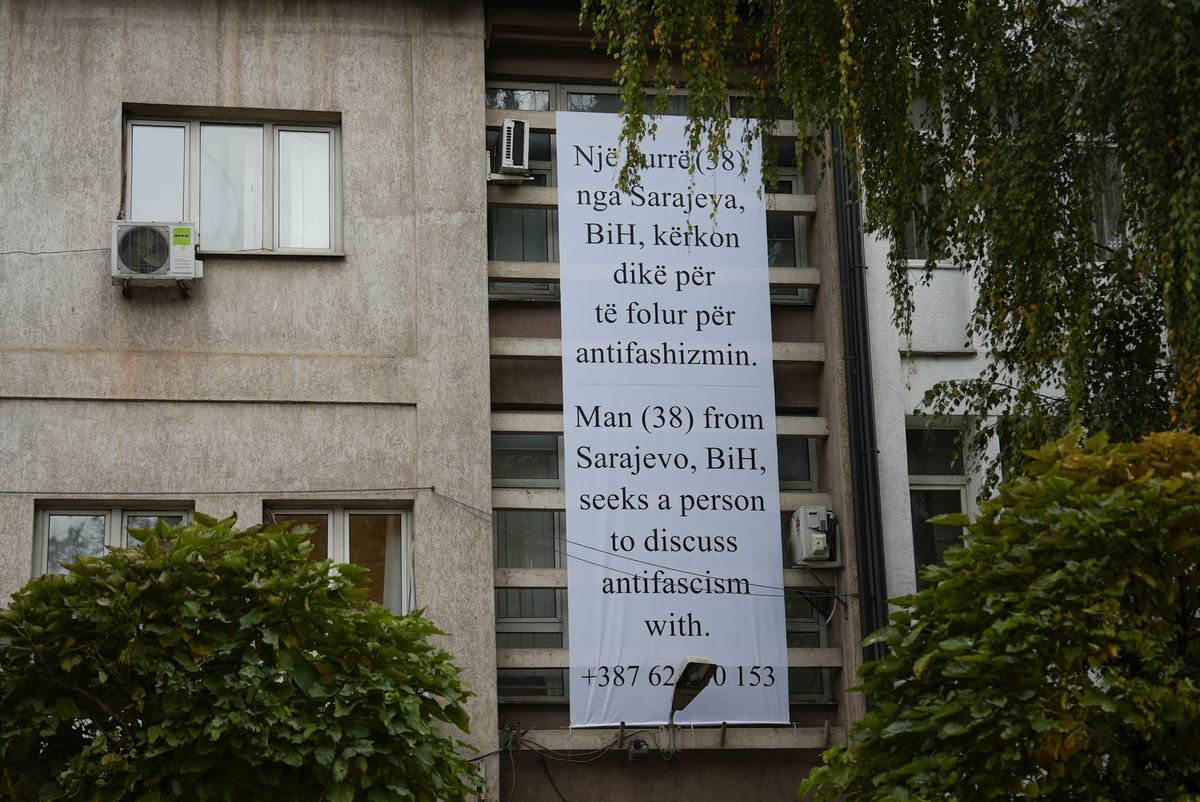
“Man (38) from Sarajevo, BiH, seeks a person to discuss antifascism with,” followed by a phone number. This is the first artistic position on the façade of the Prison of Ideals in Prishtina, part of “A Bird with a Stone Wing”, the exhibition opening the first of thirteen international chapters of Antifascism: Now. The work, by the Bosnian artist Bojan Stojčić, is relational and expansive, but also lonely, like a message to an anonymous community that hopes for an answer, a conversation, or a shared thought that could just as easily turn into conflict. It sets the tone for a project that treats fascism as a shared responsibility and antifascism as a practice rooted in the present. Initiated by Lothringer 13 Halle in Munich, Antifascism: Now. is a nomadic forum that, instead of offering a single narrative, is developed in conversation with local artists and initiatives at each stop. It opened in Munich in January 2026, in a Germany where antifascism in recent years feels more like a nostalgic postulate than a political practice. In Prishtina, the question posed by the façade is who will dare to answer.
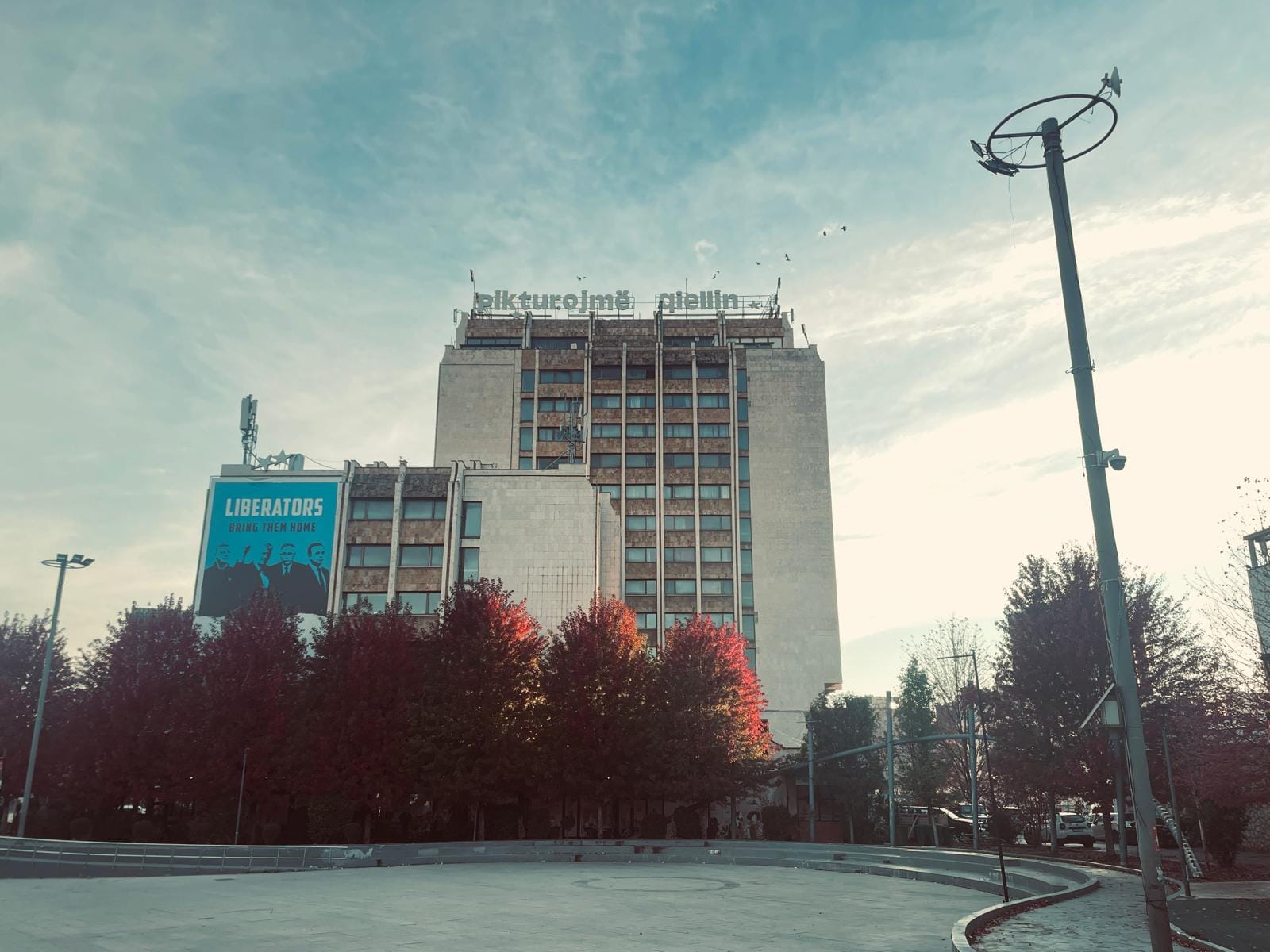
The streets of the city already offer perspectives. Kosovo is Europe’s youngest state, and it cannot be understood without understanding decades of discrimination under Yugoslav and then Serbian rule, the revocation of autonomy, war, ethnic cleansing, global military interventions, and both violent and non-violent resistance to it. Kosovo declared independence unilaterally in 2008. It is a state still waiting for justice and for a place inside a certain idea of Europe. On a wall in the center of the city, graffiti reads “BRING THEM BACK.” It refers to Hashim Thaçi, Kosovo’s former president, and three senior commanders of the Kosovo Liberation Army, found guilty in September 2026 of war crimes by the Kosovo Specialist Chambers in The Hague. For many in Kosovo, these men are the architects of freedom; for the court, they are responsible for crimes committed in its name. In October 2026, during the opening program, Albanian flags already hanging from buildings across the city formed part of the surrounding urban landscape. Above them, a flock of blackbirds, the bird that gave Kosovo its name, circles overhead. The blackbird also gave curator Julian Rieken the title of the exhibition and program, evoking a flight weighed down by memory that nevertheless goes on.
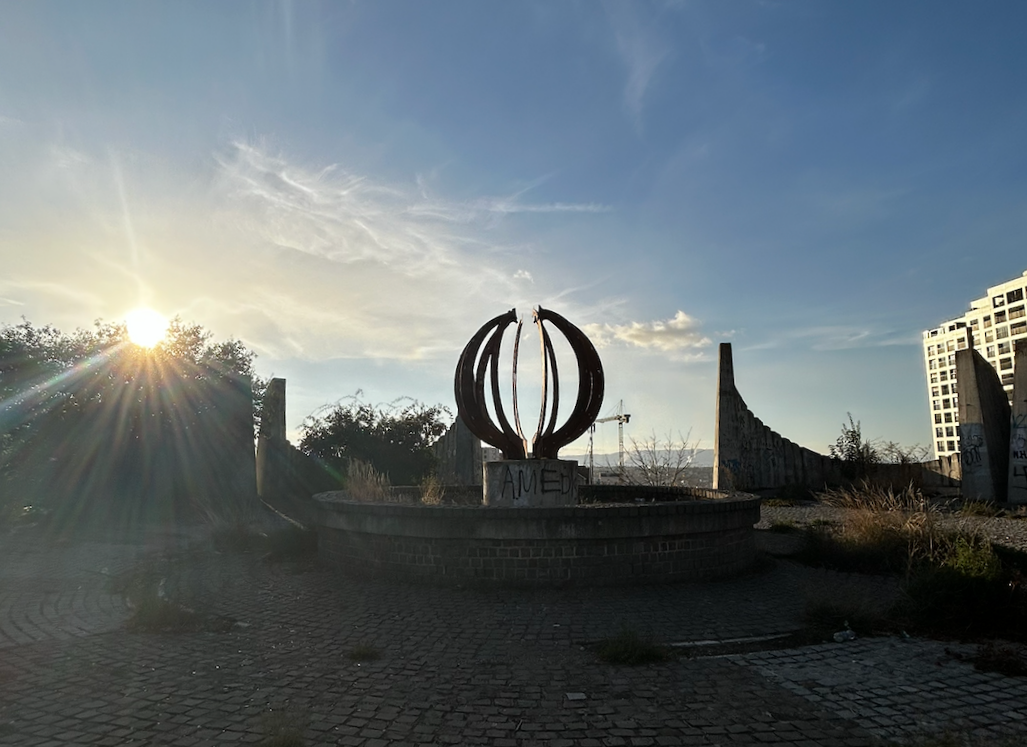
In this region where transitional justice struggles to become resolved justice, the meaning of antifascism cannot be taken as a given. The word itself is not neutral: it belongs to the vocabulary of Yugoslav partisan memory, too, the same state under which many Kosovo Albanians experienced discrimination and repression. To confront this reality, as suggested by a local journalist, the Kosovan state tends to turn history into a foundation myth while looking ahead to statehood and Europe. Heritage that does not fit easily into that story is left behind, as evidenced by the monument dedicated to the partisans and civilians from the Prishtina region who lost their lives in the National Liberation War. It stands in ruin on the hill overlooking the city center. On the other side of the narrative, citizens live with bloody histories and justice not yet realized.
Antifascim: Now. points to this dialectic as a possibility rather than something that needs to be reconciled. The venues are testimonies in themselves. Burgu i Idealit (the Prison of Ideals) is the former Prishtina District Prison, where Kosovo Albanian political prisoners were once held. Now it is in the process of becoming a museum. Reporting House, in the former Gërmia building, Kosovo’s first department store, is a museum of journalism and collective memory. Placed between a site of confinement and a site of documentation, the exhibition reflects on how testimony is silenced, and on the journalistic, archival, and artistic work that can carry it into public view.
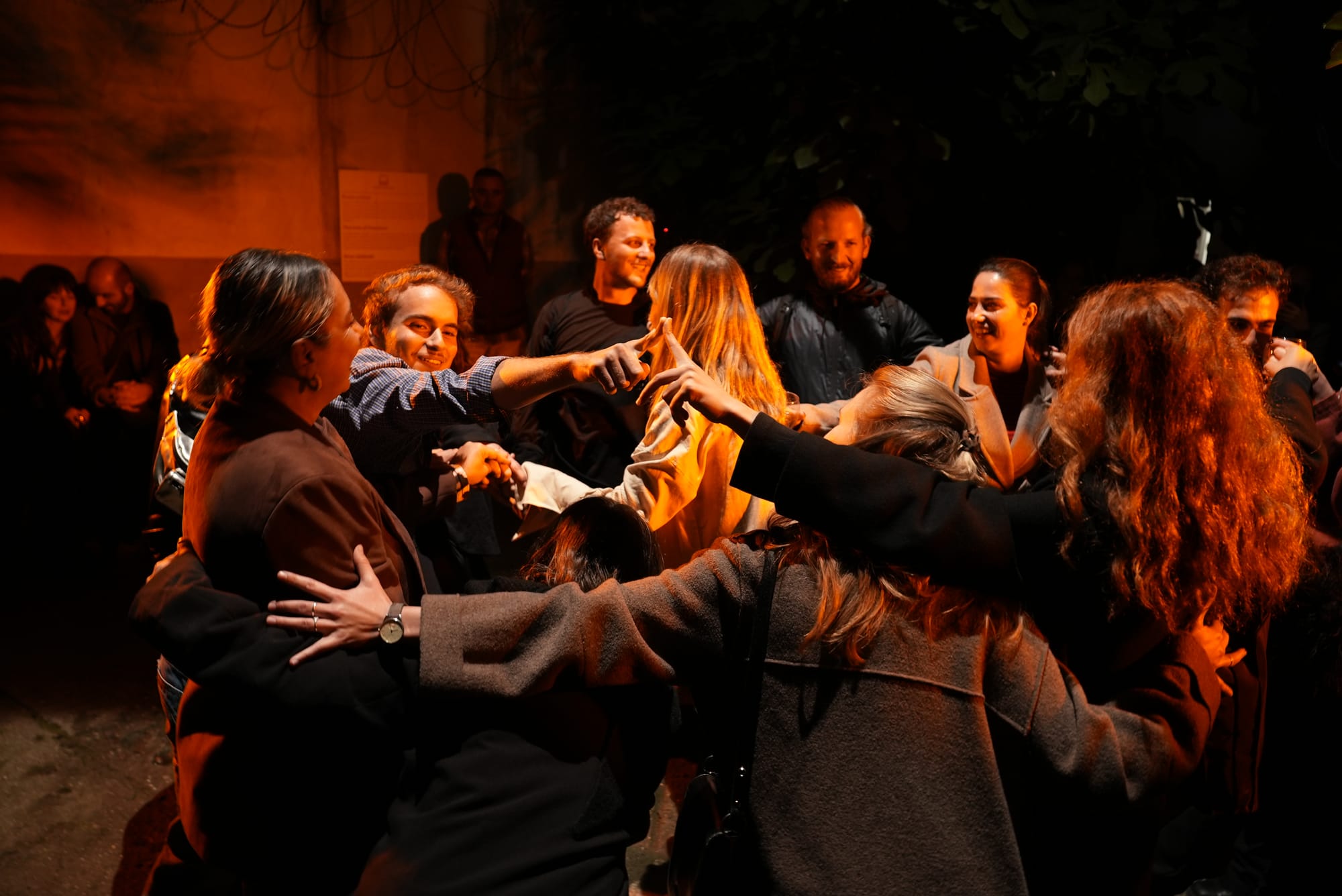
The labyrinthine architecture of the prison surrounds the works on show. At the inception of the opening program, its courtyard was animated by Ana Dragić’s warm participatory performance Unseen Dance: Eternal Flame with local artists Diona Kusari and Vullnet Jakupi; a score of gestures of resistance, developed in Prishtina and inspired by the grassroots student protest movement in Serbia, passed from body to body in the audience during the opening, across borders and ideological divides. Dragić’s movement research operates through a political vocabulary that is embodied before it is spoken, and that builds collectivity through joy and endurance rather than through representation or identity.
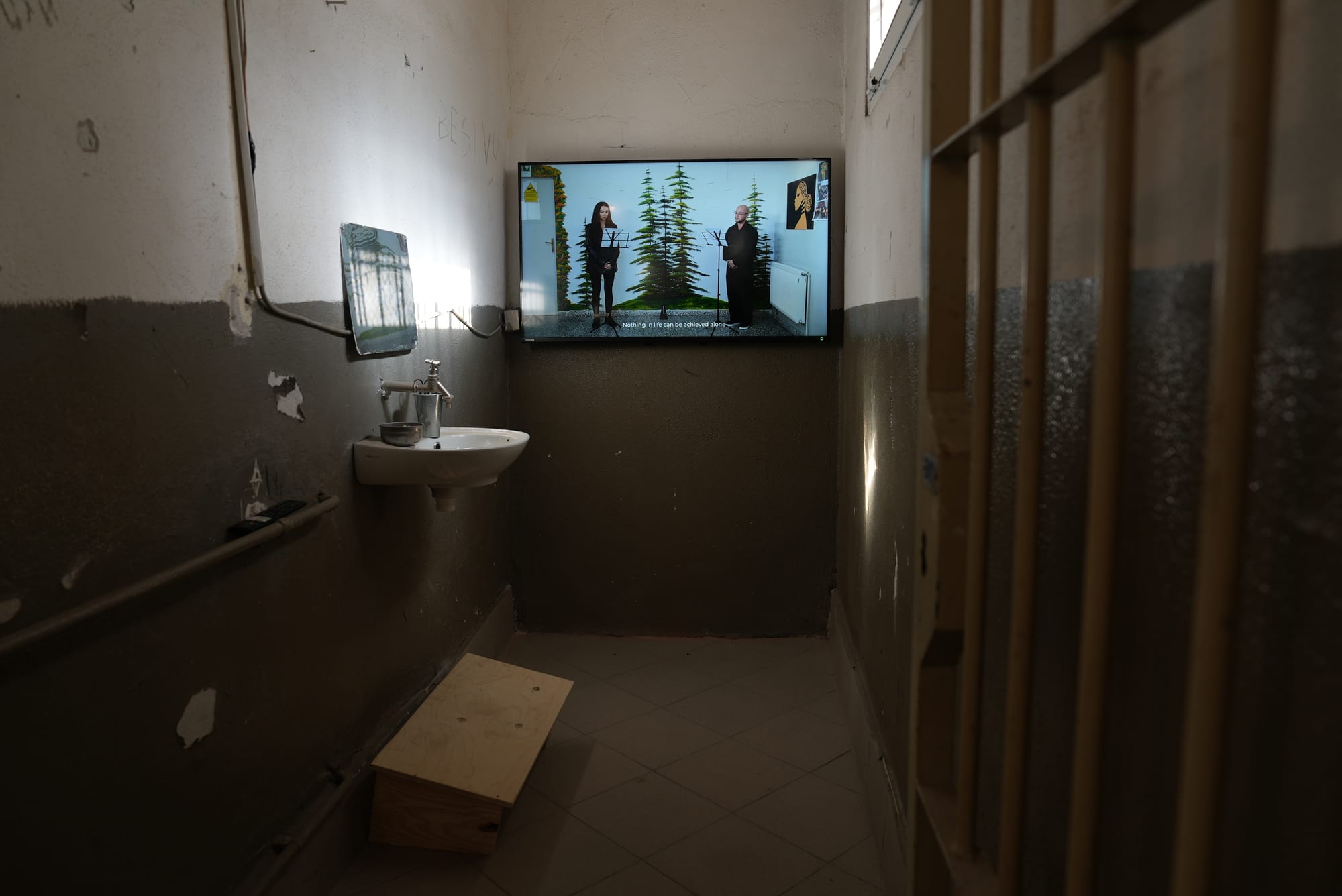
The structure’s narrow cells now host works such as Your Eyes and Hands Must Be Seen Everywhere by Blerta Haziraj. This documentary revives the history of the Antifascist Front of Women and its literary activism in Kosovo. In image after image, village women read and reinterpret archival feminist texts aloud, linking past struggles to contemporary experiences of gender, visibility, and cultural memory in rural Kosovo. From an adjacent cell, a melody reaches through and sonically reconfigures the corridors. Stefano Romano’s video and sonic installation Songs for the Present Tense documents his collaboration with female prisoners of the Women’s Correctional Center in Lipjan, about 15 kilometers from Prishtina. The work is part of ongoing research on revolutionary chants and orality. The two texts for the performance were written with the inmates, using the “exquisite corpse” method in which multiple authors contribute to a work individually. The chant that emerged from the workshop is an attempt at unstable equilibrium, a resistance against oblivion through oral repetition, and a chance for inmates to tell their stories beyond prison walls and criminalizing systems.
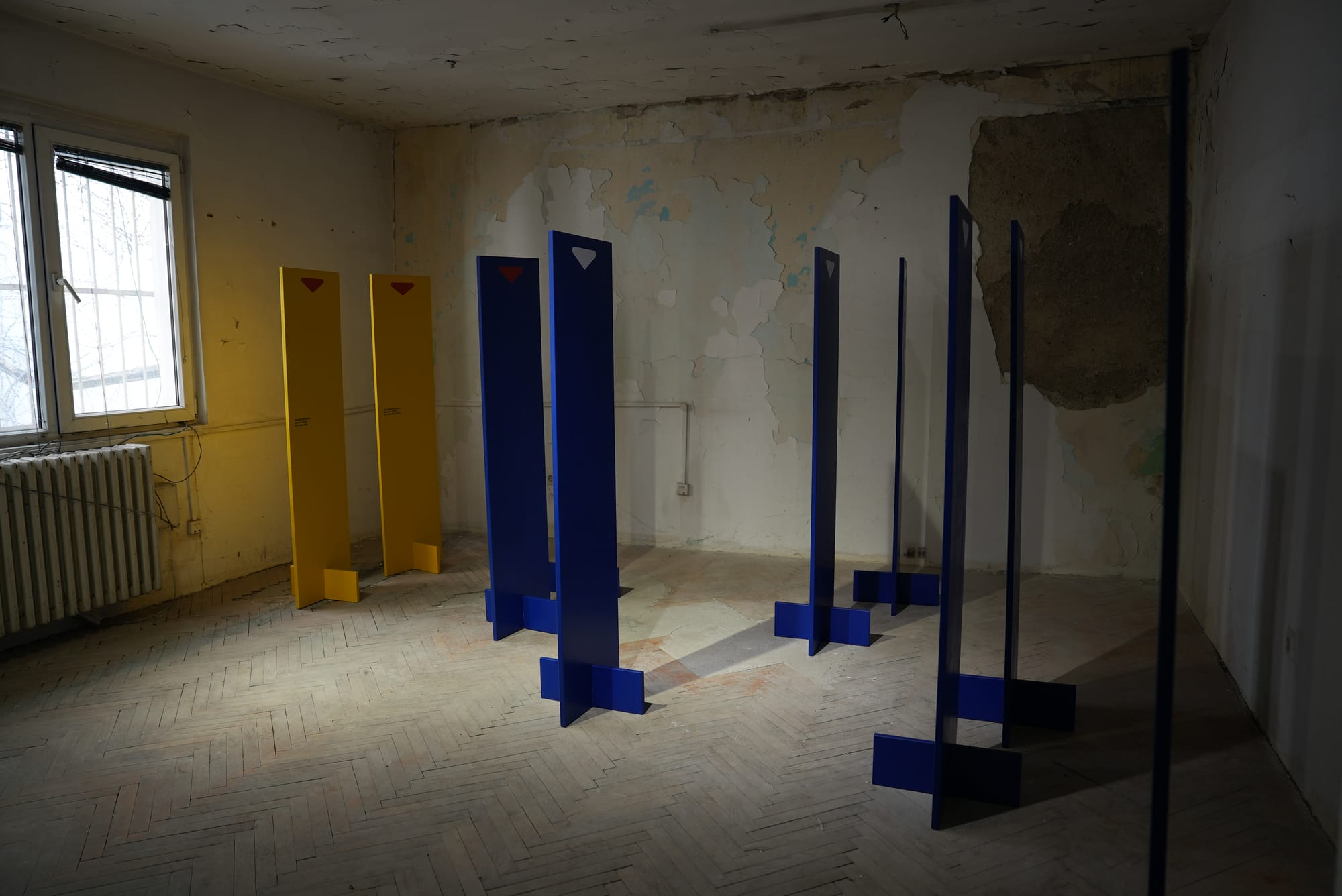
On the upper floor of the prison, the artist Jonas Höschl and the journalist collective recherche nord recreate a fascist attack scene that took place against the journalists themselves. Founded in 2004, recherche nord independently documents the far-right scene in Germany, its venues, structures, and networks, and makes the identities of neo-fascists public as a way of exposing them to accountability. This reflects the chapter’s premise that antifascism and journalism are complementary conditions of a democratic public sphere. Prishtina’s recent past became known through acts of documentation by journalists, human rights lawyers, and witnesses, who countered the historical erasure imposed by the authorities.
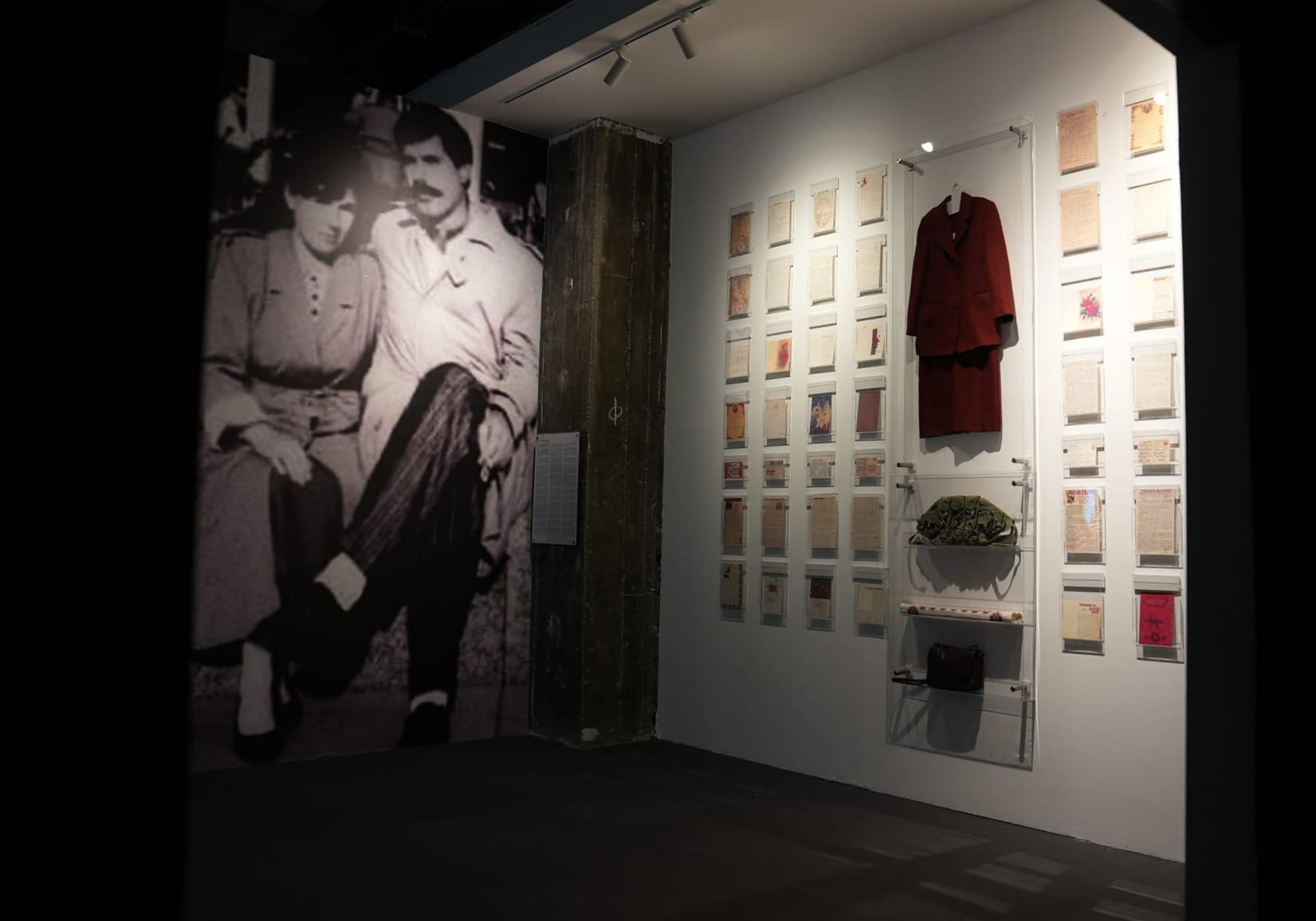
Reporting House preserves the documentation of the non-violent resistance of the 1980s and the 1998-99 war, and places it before a broader public. Among the documents is a love letter exchange between Xheva Krasniqi-Lladrovci and Fehmi Lladrovci, activists the exhibition frames as antifascist, written between 1985 and 1990, as Slobodan Milošević rose to power, repression of Kosovo Albanians grew, and federal Yugoslavia entered its twilight. Here, the independent journalist Barbara Matejčić presents her audio documentary The Camp Guard, in which Esad Landžo, a former guard at the Čelebići camp in Bosnia and Herzegovina, sentenced to 15 years and now living in Helsinki, is given a voice. During her presentation in the opening program, Matejčić stated that journalism keeps people’s attention on what matters and does not let them look away. Her work aims to prompt apology and accountability from those responsible for atrocities beyond formal law, outside the Tribunal, and as a form of reparation for victims who rarely received either accountability or apology.
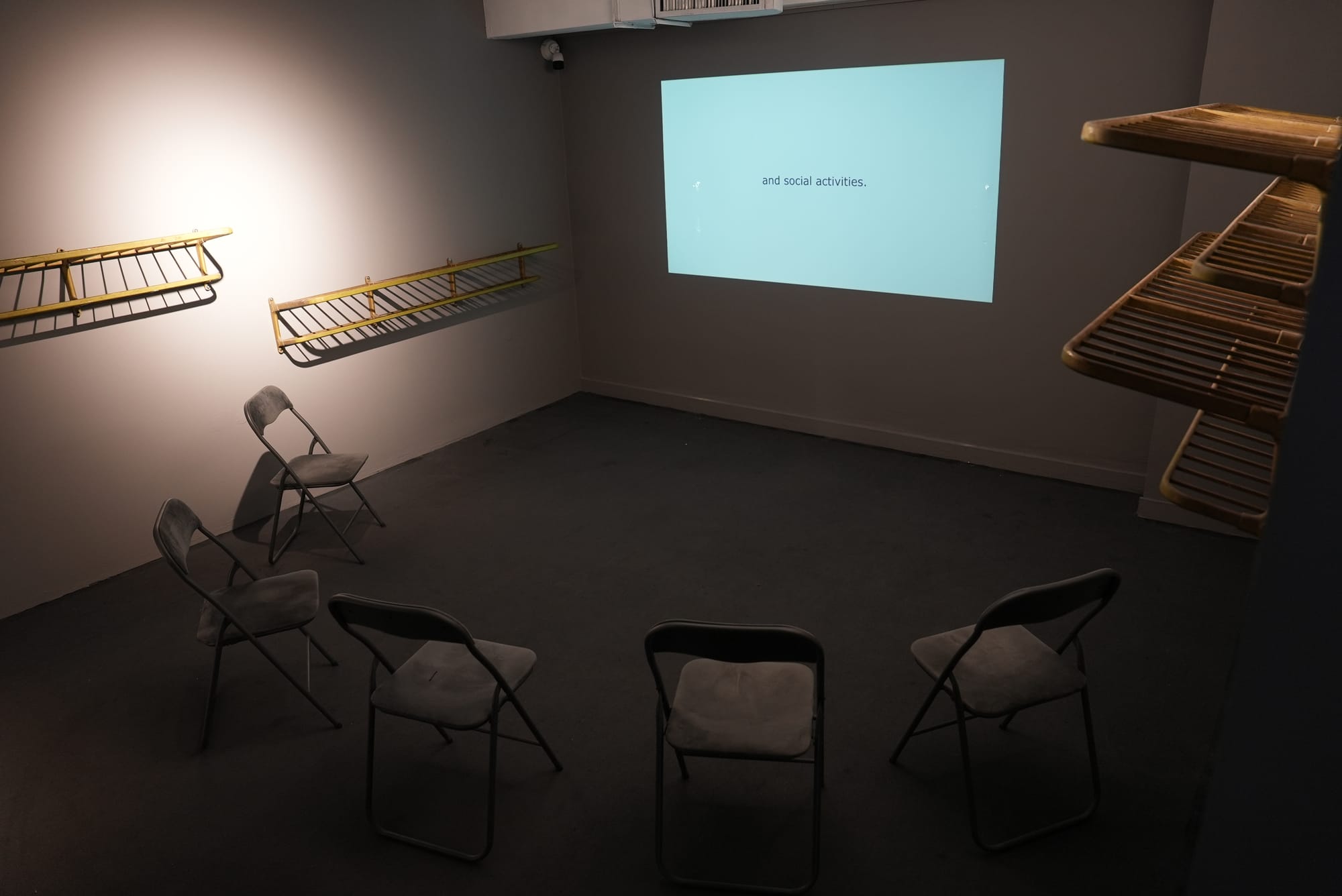
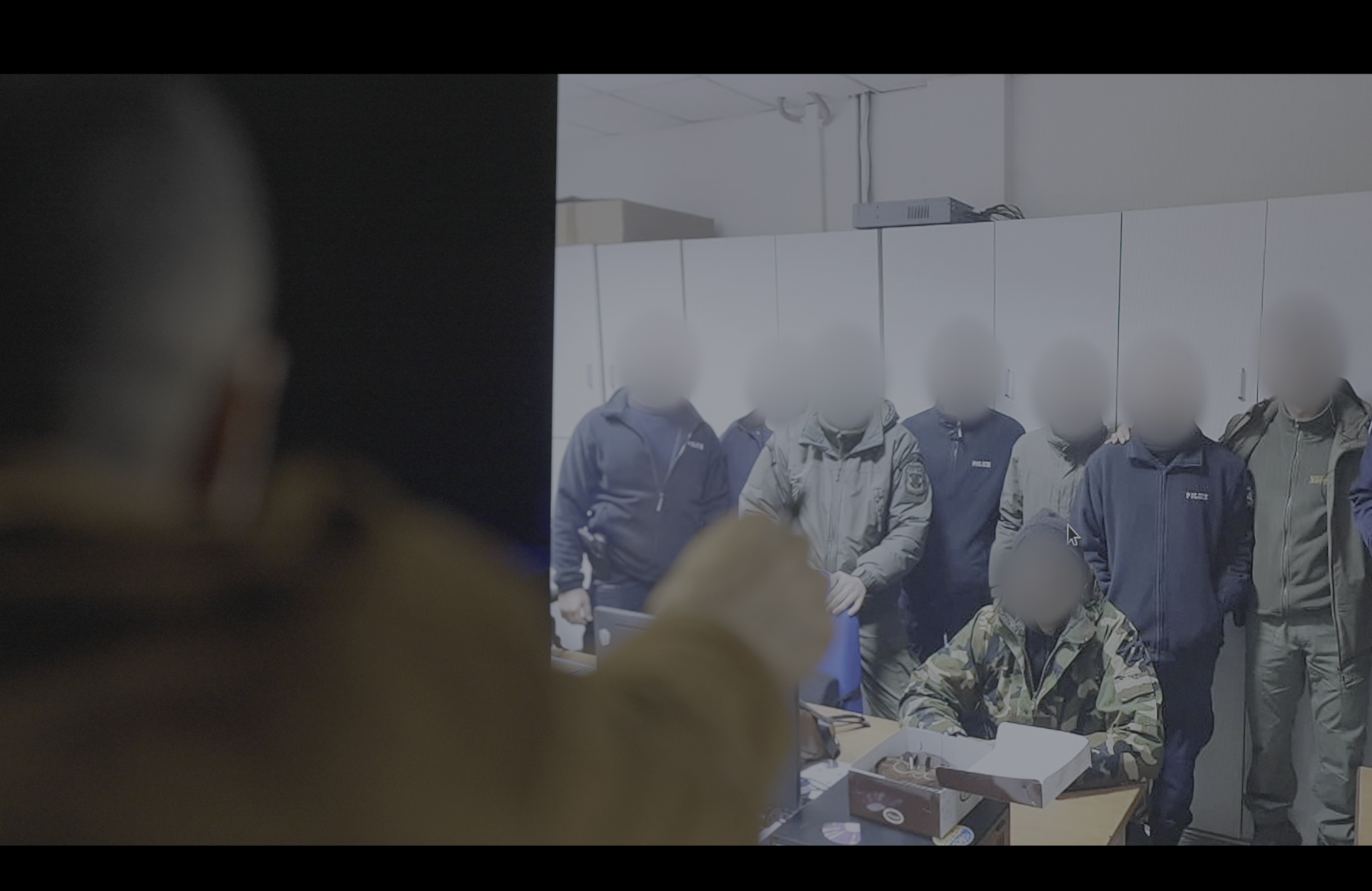
This chapter of Antifascism: Now. activated other significant places in the city as well, among them Kino Armata, a public space promoting alternative culture and social dialogue. The venue hosted 100 Days: The Forced Laborers of Evros by Forensic Architecture Initiative Athens (FAIA), followed by a Q&A with FAIA member Stefanos Levidis. The film, originally not conceived to be shown publicly, tells the story of two asylum seekers detained and forced into labor at Greek border stations in Evros, coerced into assisting illegal pushbacks across the river border between Greece and Türkiye. Over sixty tense minutes, it raises questions about the dehumanization of migrants, the importance of the eyewitness, and the labor of forensic visualization needed to build cases against the European border regime.
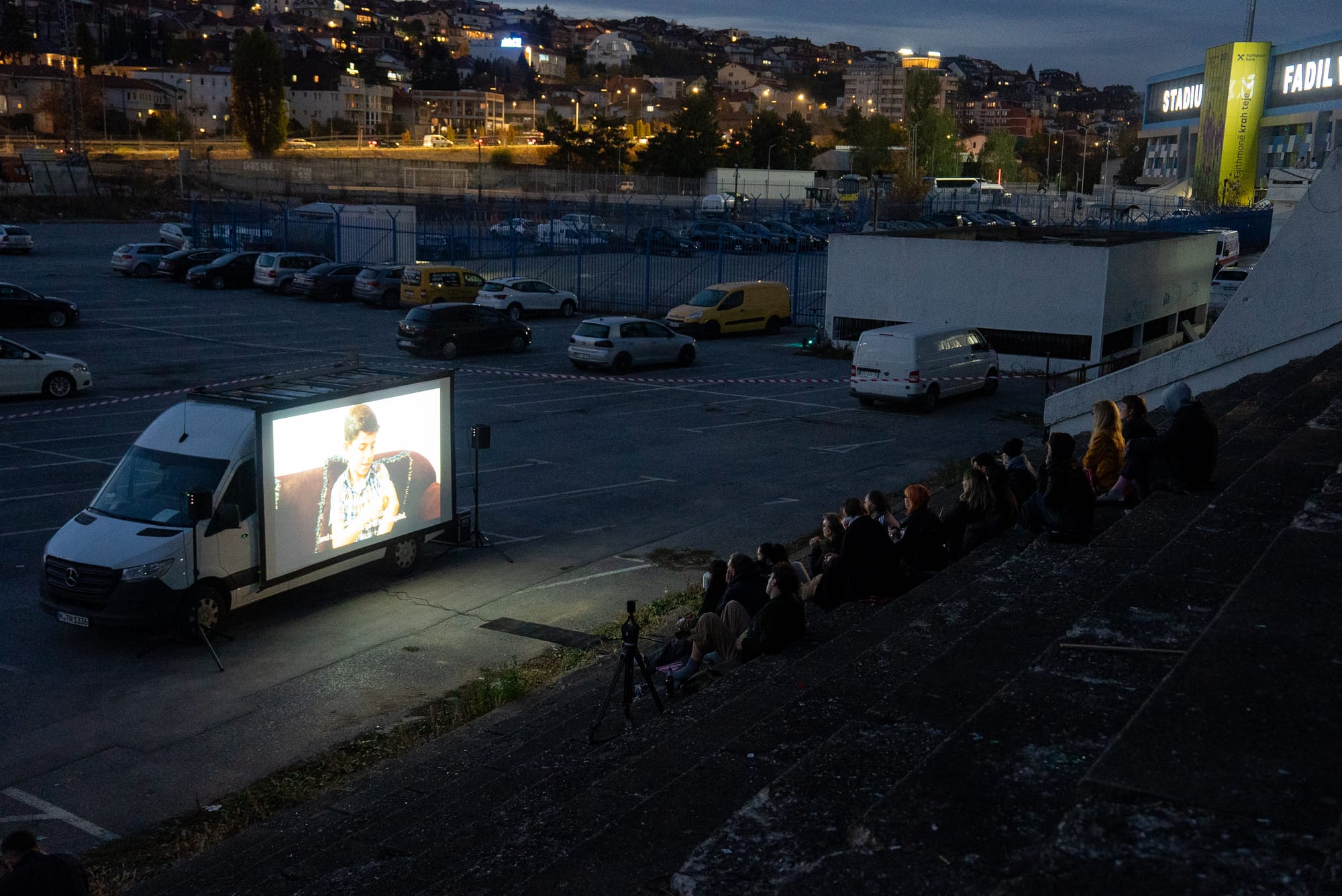
As the sky darkens at the end of the opening days, the nomadic CINE VAN parks in the lot of the brutalist Palace of Youth and Sports. As it travels through the countries hosting Antifascism: Now., it meets its first obstacle: it was held under suspicion for some time at the Serbian border before being released toward Kosovo, as the curator told me. Now, it brings the audience to Gaza as the epicenter of all antifascist struggles through the work of Palestinian filmmakers. Rehab Nazzal’s Vibrations from Gaza follows Deaf children who perceive Israeli airstrikes not through sound but through shifts in air pressure and ground vibrations, and poses the question of whether their deafness itself is a consequence of sonic weaponry. Occupation is an acoustic regime felt throughout the body in Gaza. In Larissa Sansour and Søren Lind’s As If No Misfortune Had Occurred in the Night, an Arabic-language opera on loss, mourning and inherited trauma is performed by the soprano Nour Darwish. Between the vibration that is felt and the song that is passed on, between Palestinians and audiences, the two films, in the shadow of the genocide in Gaza, provide a kind of somatic testimony, one that cannot be easily admitted as evidence before a court.
From the prison cells to the parking lot, the works of Antifascism: Now. continue directing attention towards the question of what remains of evidence when it cannot be proven in a courtroom. The threshold between “inside” and “outside” the tribunal is not a clean boundary of antifascist accountability, and curating in Prishtina means working on that line. What stays outside the courtroom is part of a precise political project, and as expressed by the artists on show, it can be a testimony that matters both as proof and a way of keeping memory alive, in tension with time and the distortion it forces on memory.
Did anyone answer Stojčić’s call from the streets of Prishtina? I don’t know. Either way, the question hints at a challenge for a nomadic project. In Kosovo, antifascism is only one of the issues under negotiation, alongside questions of what culture is for and who it is for after a war. As the project travels through the specific geopolitical context of Southeast Europe, the upcoming chapters will need to take this further into account. Trust cannot be curated on a schedule. It grows through listening, through shared work, and through a willingness to be changed by the place. The harder task for Antifascism: Now. building relationships that last, with the people, institutions, and initiatives of each place it arrives, and among the team’s own members. It is in this labor, more than in any single work, that antifascism as a practice between citizens can be probed and consolidated.
//
Visit Antifascism: Now. to find out more about upcoming chapters.