
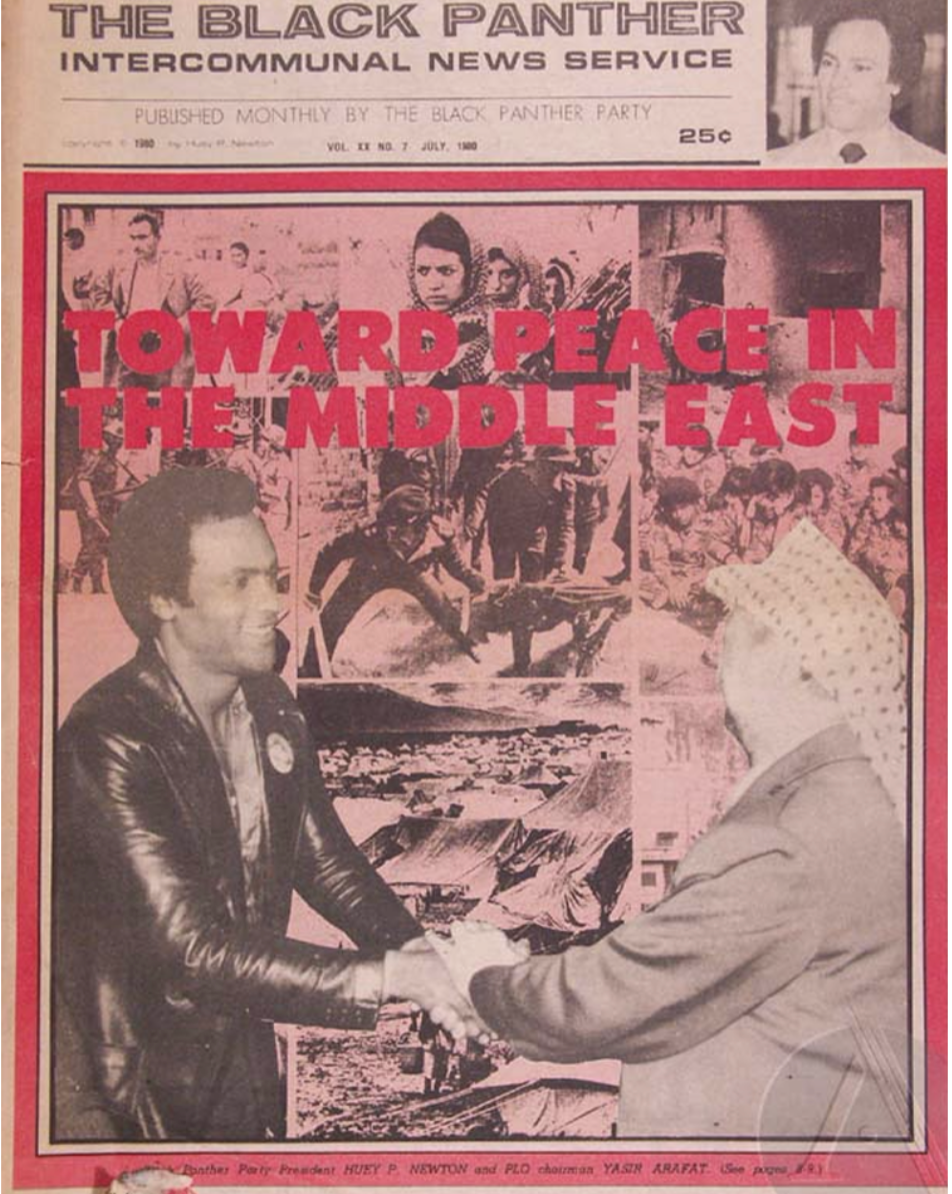
I met Delio Vasquez in Marseille, at a Palestinian-led restaurant on the occasion of the launch of his book “Huey P. Newton: I Am We” (Polity Books). By listening to him speak that evening, I kept returning to questions I wanted to ask at more length. I thought to reach out, and what follows is the conversation that came out of it: on Newton's legacy, on state repression then and now, and on what it means to keep the work of remembering alive.
Dalia Maini: Your book Huey P. Newton: I Am We has finally been released by Polity. I understand your interest in the Black Panther Party is a long-standing one. What drew you to Huey's work in particular, and what obstacles did you meet along the way to publication?
Delio Vasquez: I was introduced to the Black Panther Party when I was young, through references in underground and political hip-hop. I read a few books in my late teens and early twenties, by Panthers and about Panthers, but I wasn't pursuing it as a study, not until my PhD. I ended up studying at the place where Huey Newton did his PhD, back in 1980, and I came to understand the lack of representation of his past presence there. There was a kind of avoidance of his legacy, in part because of his struggles later in life. And very few scholars had taken up the study of not just his life but his intellectual production in the decades since the sixties, despite his fame and prominence.
While I was there, several things fell into my hands. I didn't go in intending to study Newton's thought, but many opportunities came to me. I had very lucky encounters with people connected to him, or connected to others connected to him. Despite writing a dissertation about something else altogether, I decided it was important to write this book. And I was well positioned to do it. I tend to be more empathetic towards criminalized people because I grew up poor in the Bronx. I also studied philosophy, so I could navigate some of Newton's denser writings.
It's still challenging even though the book is published, because people who work on Panther history and related histories are subject to state repression, in subtle ways and in overbearing ways. I've had conversations with colleagues who work on related matters, and we both say: there are a lot of stories we could tell. And that's just as scholars, not organizers or people in prominent political positions.
Dalia Maini: I read Huey's autobiography, Revolutionary Suicide, and I was lucky enough to hear you speak about him. He strikes me as a polymath, someone who understood the contradiction of seeking emancipation within that society and who analyzed oppression at every level. Why do you think a figure so fundamental to the Panthers' political project has been so marginalized, including in the cultural sphere?
Delio Vasquez: First of all, former Panthers are still subject to repression today. Their children are subject to surveillance. There are Panthers still in prison on false convictions, most prominently Mumia Abu-Jamal, who has been in prison for over four decades. So the state's project of targeting Panthers is ongoing, and it's not surprising that if real-life Panthers are repressed, their memory is too. I tried to edit the Wikipedia article on Huey Newton, and my edits were immediately replaced with accounts from sources written by police officers. That stuff is managed in a very intentional way.
But the most important reason his legacy remains marginalized is the relevance of his ideas: the free medical programs, the strategies for dealing with globalization and high technological development, which is what we're seeing today, and the strategies for developing liberated territories based in land and mutual aid, structured so that people can defend themselves but also interlink transnationally with others. These were relevant then and arguably more relevant now. The state, capital, patriarchy and white supremacy are invested in suppressing people's capacity to understand their own conditions and organize to liberate themselves.
Another part is that Newton, late in his life, fell into a tragic mental illness, which manifested even in interpersonal violence towards his comrades, allies and loved ones. Despite his brilliance as a theorist, people on the left have found it hard to make sense of this contradiction. I devote a whole chapter to it. He was diagnosed with bipolar disorder and, at a certain point, characterized as dealing with psychosis.
A central part of my argument is that this did not develop from natural or genetic conditions. He developed it in his thirties, althoughstatistically people who develop those symptoms do so in their late teens and early twenties. Rather, Newton was subject, as were thousands of other people in this period, to psychiatric torture and human experimentation designed to target his cognitive functions. I go into detail about other Panthers who had these things done to them, about the thousands of people in the US, about the 189 researchers involved, funded by the CIA under the mantra of MK Ultra and other headings. In the early seventies there were congressional hearings about this. Even to talk about it today, people think it's a conspiracy theory. But the conspiracy is how something that had congressional hearings could have its memory so suppressed decades later. What was done to Newton forces us to grapple with the capacities of the state in that period to disrupt social movements, and with the reverberations today.
Dalia Maini: Newton was subject to a diffuse form of state control. How did that repression work in his time, and do you see its echoes now?
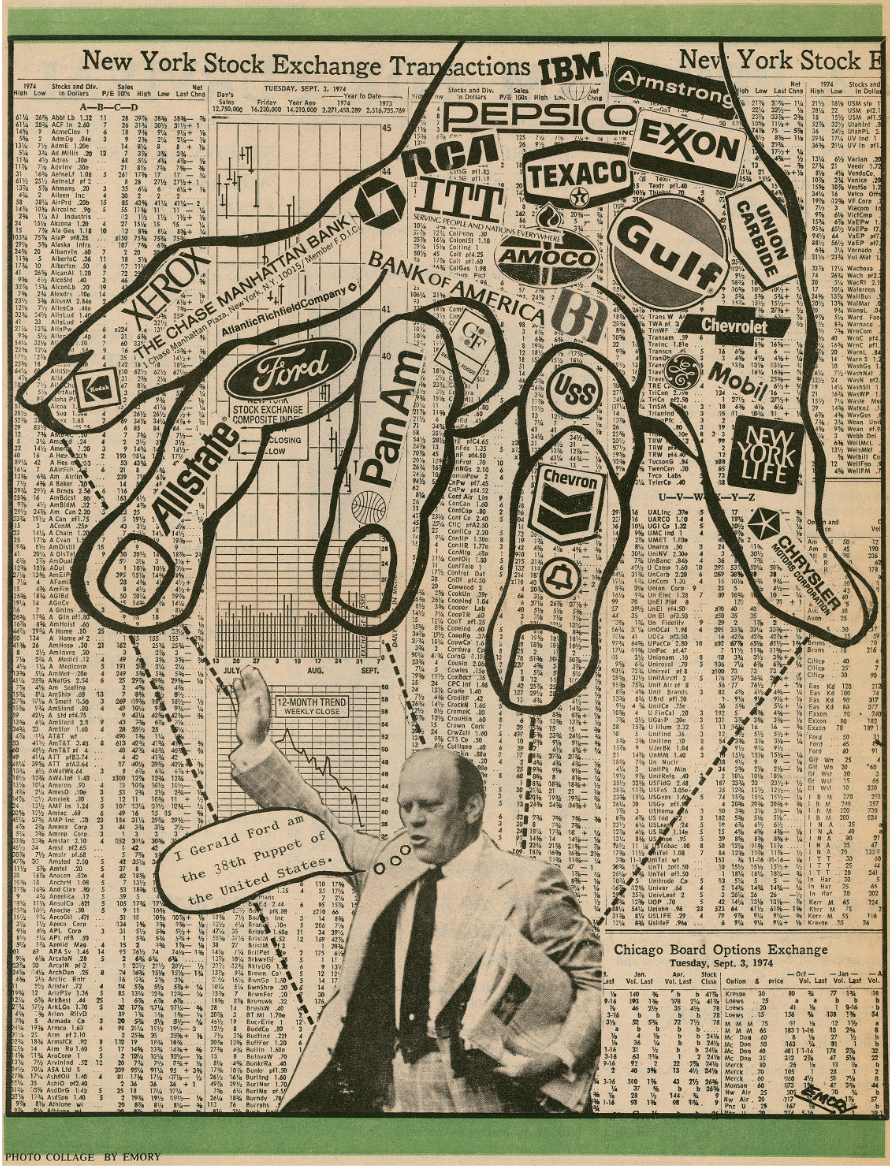
Delio Vasquez: Back then the Panthers and their allies were subject to assassination and to mass disinformation campaigns. If I'm a Panther and you're a Panther and we're sending letters to each other, they were intercepted and replaced with false letters to make us distrust each other. Things escalated to a level of violence within the party as a result. There were mass raids. Even very mainstream allies of the Panthers were harassed, lost their jobs, had mental health crises. Mainstream white liberal supporters had their lives destroyed. And then there's the cognitive warfare imposed on figures like Newton. Angela Davis talks in her autobiography about encountering these kinds of things, and, as I mentioned, other Panthers as well. I talk about the contemporary repercussions in an essay I recently published, “Huey P. Newton: From the Life of the Mind to the Revolutionary Struggle Against Tyranny Today,” drawing on Dr. Orisanmi Burton's book Tip of the Spear. Contemporary bioethicists, philosophers, and military theorists use the word neurowarfare to describe what these forms of repression look like for targeted individuals today.
Dalia Maini: There is a continuity here. By looking at how Huey was targeted, we can understand how Black and Brown people are still harmed today, perhaps not in prison but in the workplace, and how that compounds with disability, neurodivergence, or gender identity. His proposals, intercommunalism and the smaller-scale changes that could lead to it, feel even more urgent under the Trump administration, which is again diffusely targeting Black and Brown bodies. Do you see his ideas spilling into contemporary activist movements, or are they still being undermined?
Delio Vasquez: Newton had a diagnosis of the world as he understood it in 1970, and a strategy for how to deal with it. This theory he called intercommunalism.
The broader global analysis was that nation-states would have less power, because more decisions would be made by a global capitalist elite, the idea of the one percent. Nationalism would no longer be adequate as a vehicle of liberation. The example I think of most clearly is Greece many years ago, where even after electing an anarchist, they couldn't put in place policies to protect people from neoliberal austerity, because of the influence of global capital. Then think about movements like the Zapatistas in Mexico, or Rojava for a while, where people organized not at the level of the nation-state but at a local, regional level, and from there shared their strategies with other peoples seeking autonomy. Newton had an analysis of this decades before.
He also argued that this global regime is increasingly defined by military empire. The US today has over 800 military bases in the world. And perhaps most importantly, he argued that the capitalist drive to integrate technology would have irreversible effects. First, automation would displace the working class, throwing more people into precarity. Then there would be what he called cybernation, a model of governance in which states integrate computers into decision-making. And ultimately technocracy, where decisions get made by a subset of technical workers who can no longer be called workers, because they become so distant from the rest of the population. So we would have to develop a new theory of our existence. Society can no longer be thought of as producing things in order to survive, where your worth is measured in the labor you produce. Here he was very influenced by James Boggs, a Black anti-capitalist from Detroit, and his partner Grace Lee Boggs.
That's the pessimistic picture. But Newton, being a dialectical thinker, always saw these conditions of oppression as the very grounds for people to exercise agency and organize. The solution is for people to organize locally and insist on the connection to land and on our ability to sustain ourselves, whether through food sovereignty, or expropriating in order to sustain our communities, or collectivizing our labor. The Panthers created free food programs, free medical programs, their own schools, and they did this without any money to start, from the collective labor of people who saw that what they were doing would bring about their liberation.
And this is the point I try to repeat: the Panthers knew they could not bring about a revolution themselves. They were only a group of radicals. Social transformation can only be brought about by the mass of the people, who have to decide: I can run a medical program myself, I can find a space to house people. Newton believed that oppressed people are in the prime position to act from that place. Once you're at the bottom of society, you realize you can only rely on yourself and those around you. You can't count on elites who, at a certain point, are sociopathic in their treatment of others. So he was optimistic that despite everything arrayed against us, we can build the world we want.
Dalia Maini: Newton was a prophetic figure: much of what he observed globally has come to pass. I think brilliant figures like him have a peculiar relationship with time, as if they have lived both the future and the past, which may be why many of them are drawn to spiritualism. But we are now in that future, one of global techno-governance…
Delio Vasquez: Technofascism.
Dalia Maini: Yes, global technofascism and rule by a few. How do we build intersectional solidarity under these conditions, with so much segregation between classes? What do we need to hospice? And how do we bring together those who chose to radicalize and those born into the struggle? I don't expect a fixed answer, but I think the strategy for the present is worth asking about.
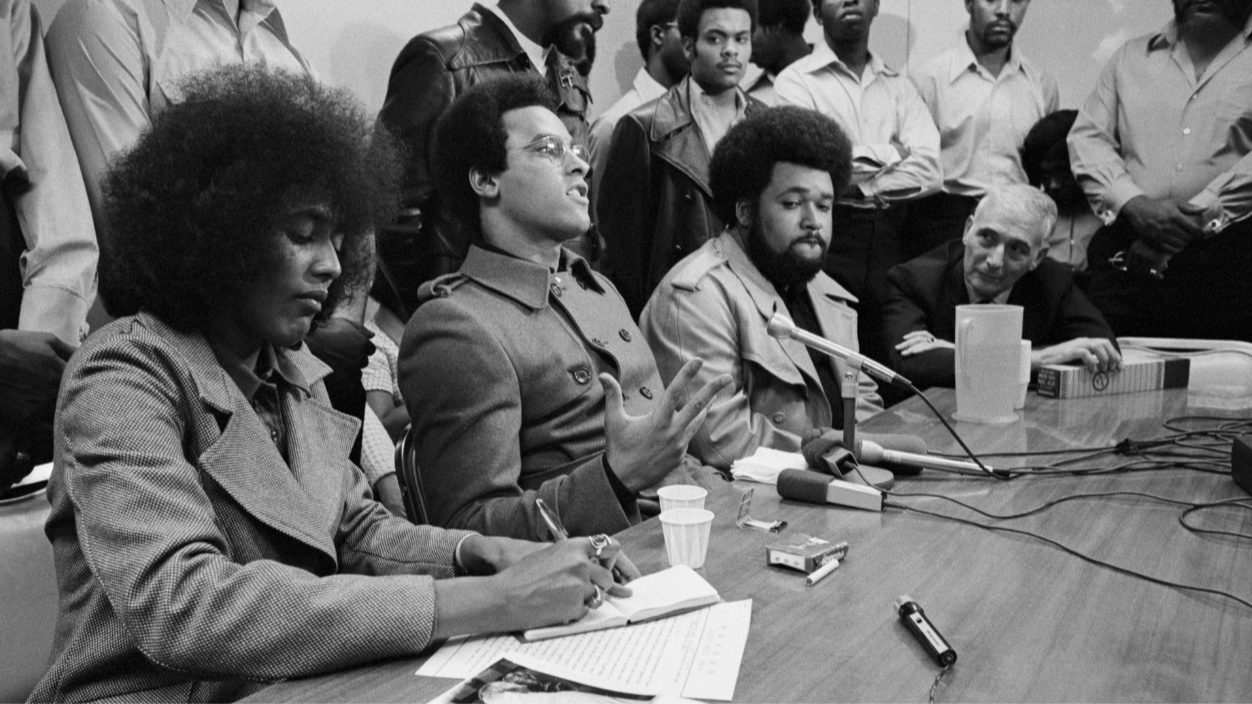
Delio Vasquez: About Newton's seemingly prophetic analyses: he didn't believe he was a prophet. He understood what he was doing as an application of dialectical materialism, the idea that everything is in flux and has within it tensions that eventually produce other conditions. For him, understanding the rise of technological society was a matter of understanding the contradiction between capital's desire to maximize profit and the objectification of the worker. He integrated other ideas too: empiricism and rationalism, philosophical skepticism, ideas of flux and phenomena. There's a chapter on this in the book, and on how it connected to his experiences in solitary confinement.
There's another thread, and it makes some sense to me too. The way people of African descent talk about our ancestors: I think of Huey as an ancestor, someone whose legacy I've tried to help repair. Ancestors aren't in the past; they're in the present. Resonance is a good word. Newton's brilliance and how he was harmed are both so relevant today. He would say the fact that I was tortured itself has within it a positive element that, over time, will overtake the negative. The whole package of his life, the good and the bad, is a lesson for us. That feels like a spiritual insight.
Now, on privilege, sacrifice and solidarity. If there's anything we've learned from the history of fascism, it's that whatever comes for me today will come for you tomorrow. Before the Nazis imprisoned Jewish people, Romani people, and queer people, they were putting political activists- communists, socialists, anarchists- in the concentration camps. And before that, they put in there the class of people called criminals. Because we lack empathy for poor people, most of whom are committing crimes against property, we couldn't understand the threat to us. Think about that from an abolitionist perspective.
Huey argued that even though people in the third world may suffer the most, it is arguably the people in the first world who are the most colonized, culturally and psychologically. Part of that colonization is the inability to suffer with the suffering of others, to see their experience as connected to your own: the alienation of human from human, human from nature, divided by race, gender, sexuality, ability. For Newton, everyone's well-being is tied together. White people need Black people to help them grasp what they're disconnected from, and Black people need white people's allyship to overcome this technofascist condition. Just to use that binary; we can use any other.
Dalia Maini: If I remember well, when white people asked to join the Panthers, they were told to organize their own militant group. I find that strategy interesting because it asks you to examine how oppressive you are within your own community.
Delio Vasquez: The Panthers believed each community has particular struggles to work through, and that people in those communities often, though not always, have the most insight into them. At the same time, the Panthers worked with everybody. They said they'd ally with anyone who would ally with them: Indigenous people, the gay liberation movement, the Dalit Panthers in India, the Polynesian Panthers in New Zealand. So we shouldn't mistake a focus on the problems in your community for separatism. The Panthers were absolutely against that.
Dalia Maini: I'd add that Europe is the laboratory of the Enlightenment, and modernity shaped the idea of blackness through the slave trade. So white subjectivity itself is formed through colonization. Maybe that goes even deeper than we've said.
To return to Newton: in the last chapters, "The Life of the Mind, the Politics of the Street," you address his spiritual upbringing. I believe political life and spiritual life need each other. Can you tell us about his spiritual practice, including his connection to Ubuntu, and how it shaped his politics?
Delio Vasquez: A common understanding is that the Panthers were atheists, because of their Marxism. They were robustly Marxist, but not dogmatically. They drew from decolonial and anarchist thought, and they were part of the origins of Black feminist thought. And the party was seemingly anti-religious early on. But that's not the full picture.
Newton was the son of a pastor and was deeply influenced by his father's courage in speaking the truth in the racist South. He was inspired by certain texts in the Bible, which he understood through the frame of existentialism, Ecclesiastes in particular. He would return to the Bible for inspiration while also critiquing the madness in it, to use his words. And there's a crux to his thought, grounded in dignity, agency, the will to will towards freedom, that has a spiritual core.
When Newton came out of prison in 1970, after three years as a political prisoner, he sought to reintegrate the Panthers with the Black church, which during slavery and after has been the most consistent institution in the Black community. He realized you can't take an anti-religious position and alienate so much of the community by not grasping the importance of the church in giving people strength against the brutalities of slavery. There's a resonance between his belief in the will and the empowerment that comes from faith: if you're incarcerated and you seemingly have support from no one, you can find within yourself the ability to overcome. In practice, many church leaders supported the Panthers even in their so-called atheist phase. The first free breakfast program was run out of a church.
The title of the book is Huey P. Newton: I Am We, given the centrality of that phrase to his thought. His belief, grounded in the African concept of Ubuntu, is that I am only possible because of my relationship to everyone else: the inseparable connection between self and other, between all life, and more than that, the animate and the inanimate. Newton also grounded these ideas in Western philosophy. He integrated post-structuralism, such as Derrida's analysis of language, and drew on theoretical physics to critique the subject-object distinction. So he was invested in a broader monism, and in the notion of flux for understanding the world.
Dalia Maini: To close: this summer, during the heatwave, laborers in the south of Italy, many of them Black and Brown, occupied churches simply to find somewhere cool. It made me think of how such places can still offer community against all odds, and can be subverted for it.
Delio Vasquez: Thank you so much. It's been great. And thank you for reaching out, and for coming to the talk in Marseille.
Dalia Maini: Thanks to you, Delio; it was inspiring. May your work keep proliferating!
//