
Before Casa Batlló became priceless, people sold it in pieces.
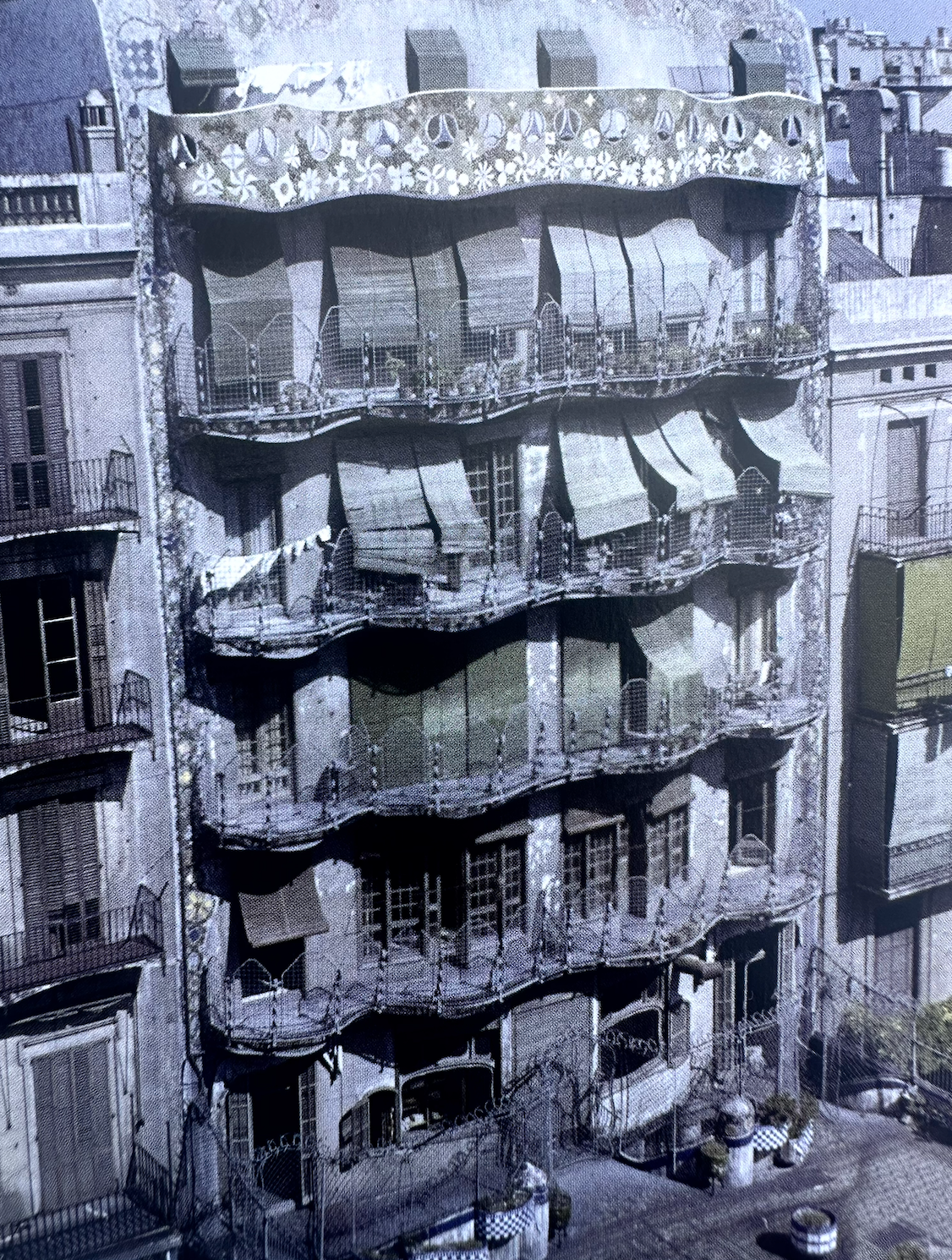
It is hard to believe that not long ago this buzzing tourist hotspot was almost dismantled. I’m walking up towards “Gaudí-Miró-Gomis: Deconstructed”, part of the Casa’s contemporary program for Barcelona Gallery Weekend. Once I arrive, the curator narrates the Casa’s history of removed doors, discarded original features, and of people rescuing what others no longer wanted. A photograph by Joaquim Gomis shows the rear façade looking exhausted: blinds unevenly lowered, sagging awnings, Gaudí’s extravagant balconies carrying on above the ordinary mess of habitation. Gaudí, before everyone agreed.
Miró learned from him. Alongside Gomis’s photographs, the other assembled artists helped, and continue to help, make Gaudí legible to others. It’s a beautiful reminder that artists need other artists for their legacies to continue. The exhibition—wrapped in the special effects of the Design studio Tomorrow Bureau—builds this thread through Miró’s restlessness. Paper becomes insufficient; he wants texture, clay, the resistance of some other material. Gaudí had worked with artisans, making the intelligence of their hands part of the architecture. Miró looks at him as a sculptor. Trencadís, glazes, colors, and forms gathered from the Catalan landscape offer possibilities to someone dissatisfied with what he already knows how to do. Inheritance can begin in boredom.
The Casa keeps supplying examples: the doors, the ventilation from the windows floating like a jellyfish. Immersion was already given by Gaudí’s understanding of defining space through details. Casa Batlló Contemporary occupies a former workshop, and Studio Mesura’s aluminum ceiling picks up the building’s aquatic associations by means of contemporary fabrication. Tomorrow Bureau enlarges and animates Miró’s details and uses AI to set Gomis’s archive in motion. The digital pieces offer access to details conservation prevents us from approaching.
Yet Gomis photographed a building whose importance still needed arguing for. The technology here today addresses a public already arriving at a masterpiece. The task of getting somebody to look has changed; the conditions under which looking becomes possible have too.
This is the ambient spirit of Barcelona Gallery Weekend: recognition appears as an ongoing social process, an organized exercise in agreement, an invitation to recognize importance—sometimes before the price rises, sometimes after the artist has died.
By evening, a few blocks up along the iconic broadway, Passeig de Gràcia, La Pedrera is visible from the rooftop of my residence, The One. The mountains in Tomorrow Bureau’s renderings become a horizon again. For two nights, we journalists are invited to momentarily forget the precarity of our labor and live like the collectors who come to enjoy Barcelona Gallery Weekend. Déformation professionnelle: I enjoy the view and calculate the contradiction. A room costs €400–500 a night.
The contradiction is material rather than rhetorical. Culture helps produce the desirability from which the property, tourism, and hospitality industries extract value, all while many of the people producing culture live against precarious incomes and rising housing costs. My access to this version of Barcelona depends, temporarily, on somebody else paying. Loving a city from that state of exception is easy.
“This is Barcelona,” the city announces. This, and everything gentrification has taken away.
Inside the hotel, Fernando Prats offers something quieter to look at. His Pintura de pájaros para una habitación privada (2016) extends through the rooms with a restraint that is unusual for collections made to accommodate the demands of hospitality. Prats defines the rooms, yet his artworks are not made to fit. A mark resembles a brushstroke and the flight of thousands of hummingbirds. They disturb smoke-darkened panels; their passage leaves the image behind.
Something is pleasing about this allowance for accidents in a space where every other circumstance is supposed to have been anticipated. I encounter the work without organizing myself into a visitor. I leave, return, then look again. Outside, thunder and rain make their theatrical appearance. I sleep tenderly, aware that the people I meet want Barcelona to change without surrendering the traditions and aesthetic intelligence that make it beautiful (as well as tragically unaffordable).
The next day, after an exquisite anchovy brioche (€5) and the local wine, xarello (€6), at a small and aesthetically perfectionist fish bar called Nardi, we took a taxi to L’Hospitalet, where the denser, visibly working class fabric beyond Barcelona’s familiar cultural center extends. This journey takes us through space and lives, and with the relative proximity and propinquity of etHALL and Galería Alegría I find reason enough to follow the programme where it leads me.
At etHALL, the scale changes. This is a gallery whose judgement I want to follow: June Crespo exhibited here in 2016, before her acclaim became widespread. A gallery’s history records whom it was prepared to spend time, space, and money on before everybody else caught up.
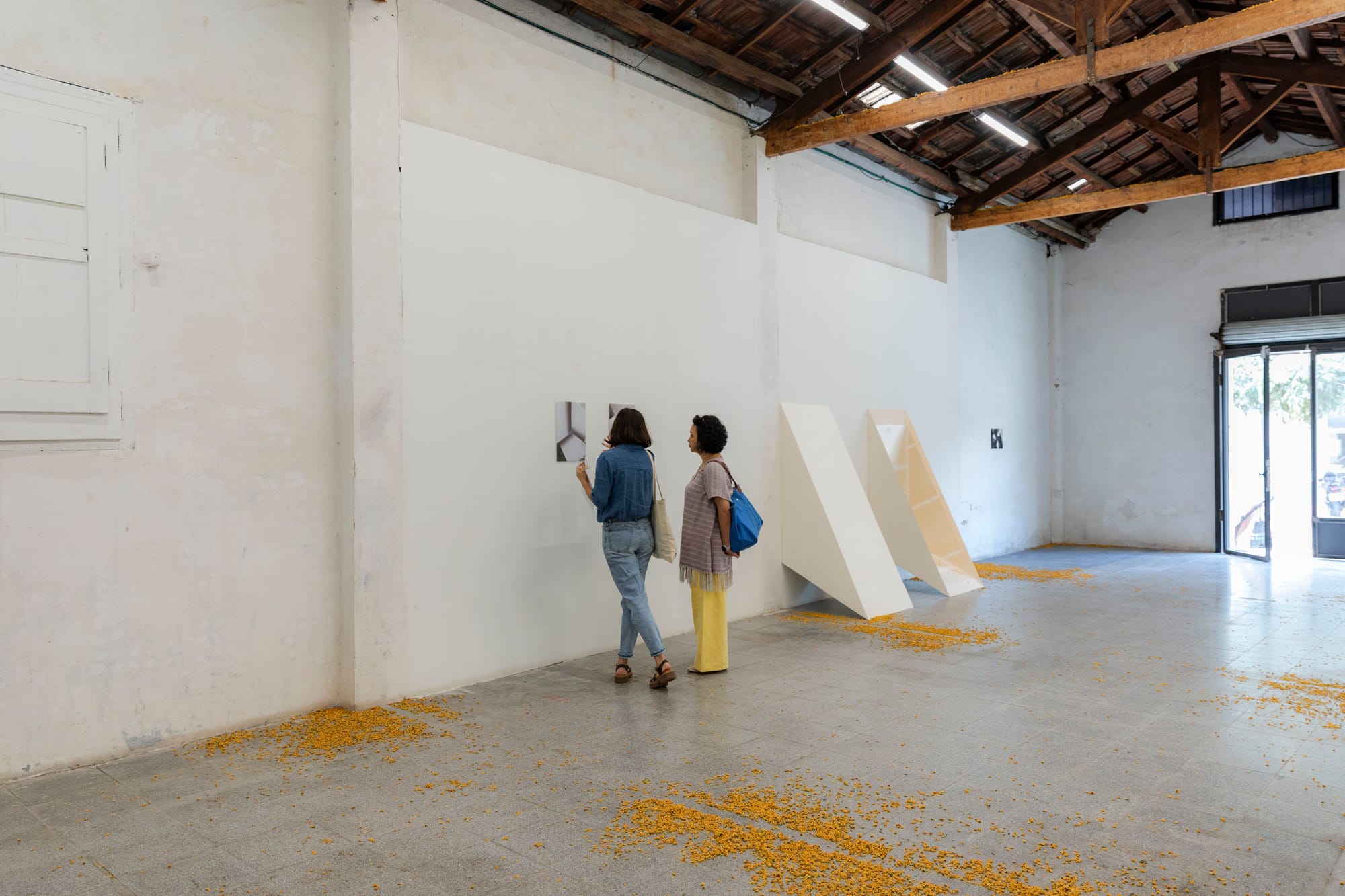
Eulàlia Rovira’s Clin (2026) suspends another agreement, among the humidity, the flowers, and corners she composes, an ode to nothingness. Her installation works with the architecture at the point before orientation becomes convention. Inclination is understood as deviation from the vertical—but who gave the vertical priority? A slight shift brings overlooked relationships into view. The refusal to treat a starting position as innocent feels especially useful during a press tour asking us to form opinions according to a schedule.
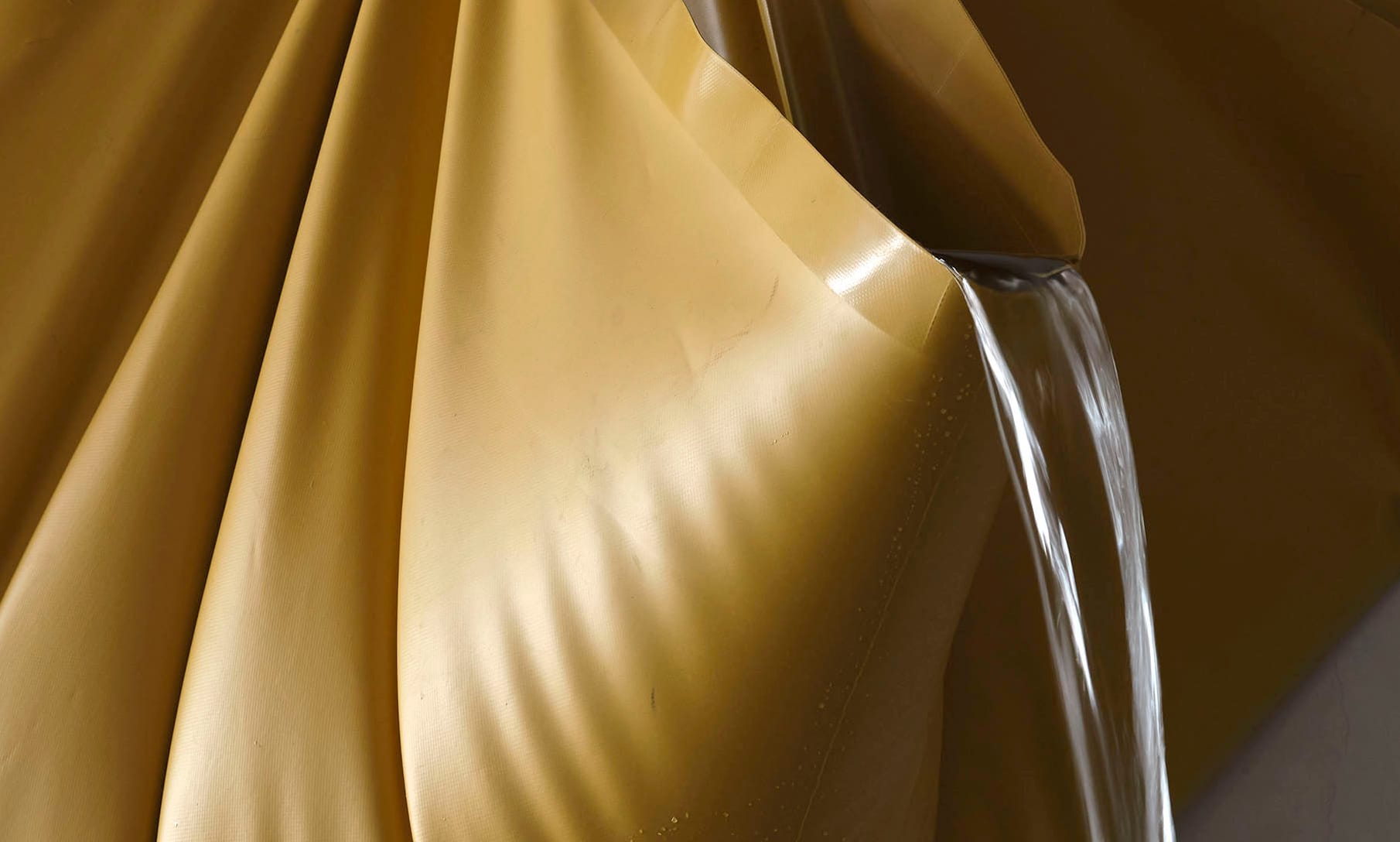
In etHALL’s backyard, Sergio Prego’s “Overflow” presents a new work from The Face of Another project, begun here in 2022 and drawing inspiration from ceramic vessels and figures in Hiroshi Teshigahara’s film bearing the same title. The plastic fountains bring Senga Nengudi to mind: the suggestion of a body in yielding material, a form seemingly unfinished with gravity. I find them beautiful. Prices range from €25,000 to €40,000.
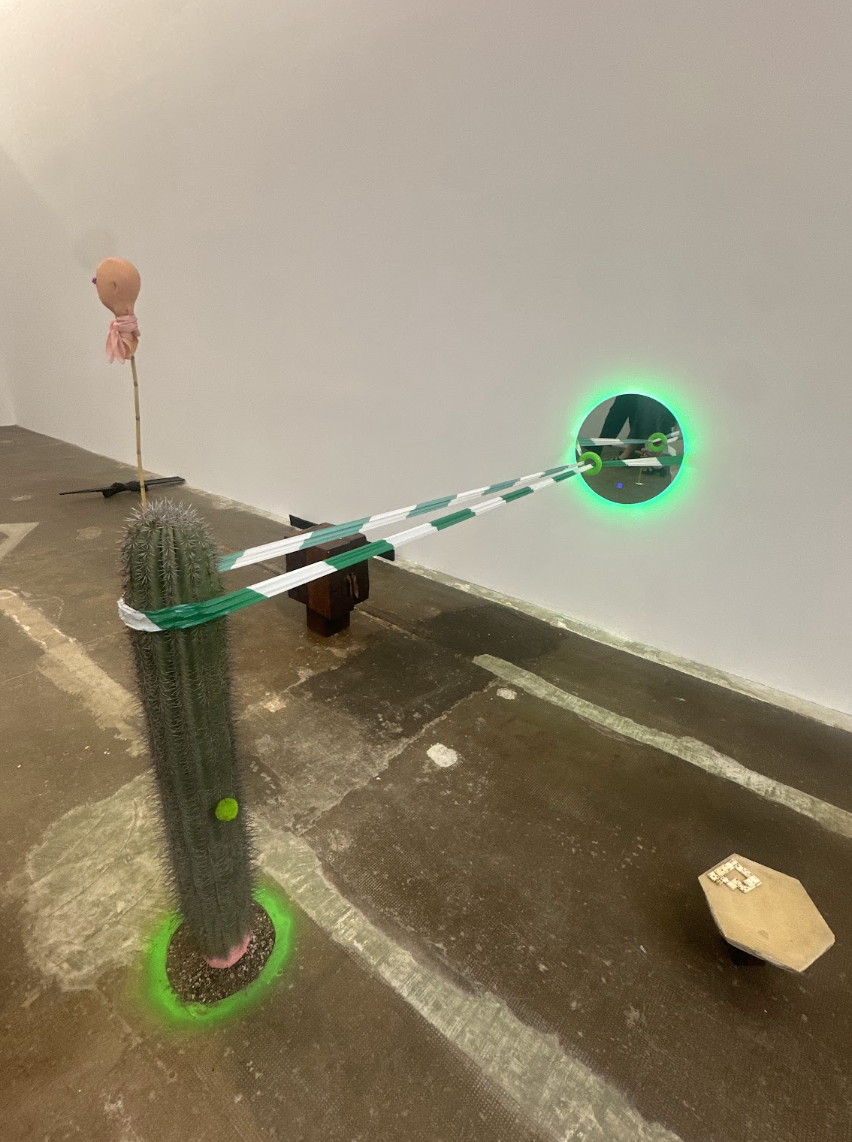
Nearby, Galería Alegría’s “Ballestrinquers”, bringing together Luis Bisbe and Jacobo Castellano, takes its title from a clove hitch knot. The program gives us a dictionary definition: two turns, ends crossing. Initiated as an artist-run space, Alegría invites an artist to curate another artist: roles are thus passed around. The knot supplies an image for the arrangement. What holds depends on how things are brought together. The syntax is more important than the vocabulary—a thought the architects at MACBA, which I’ll visit shortly, make explicit.
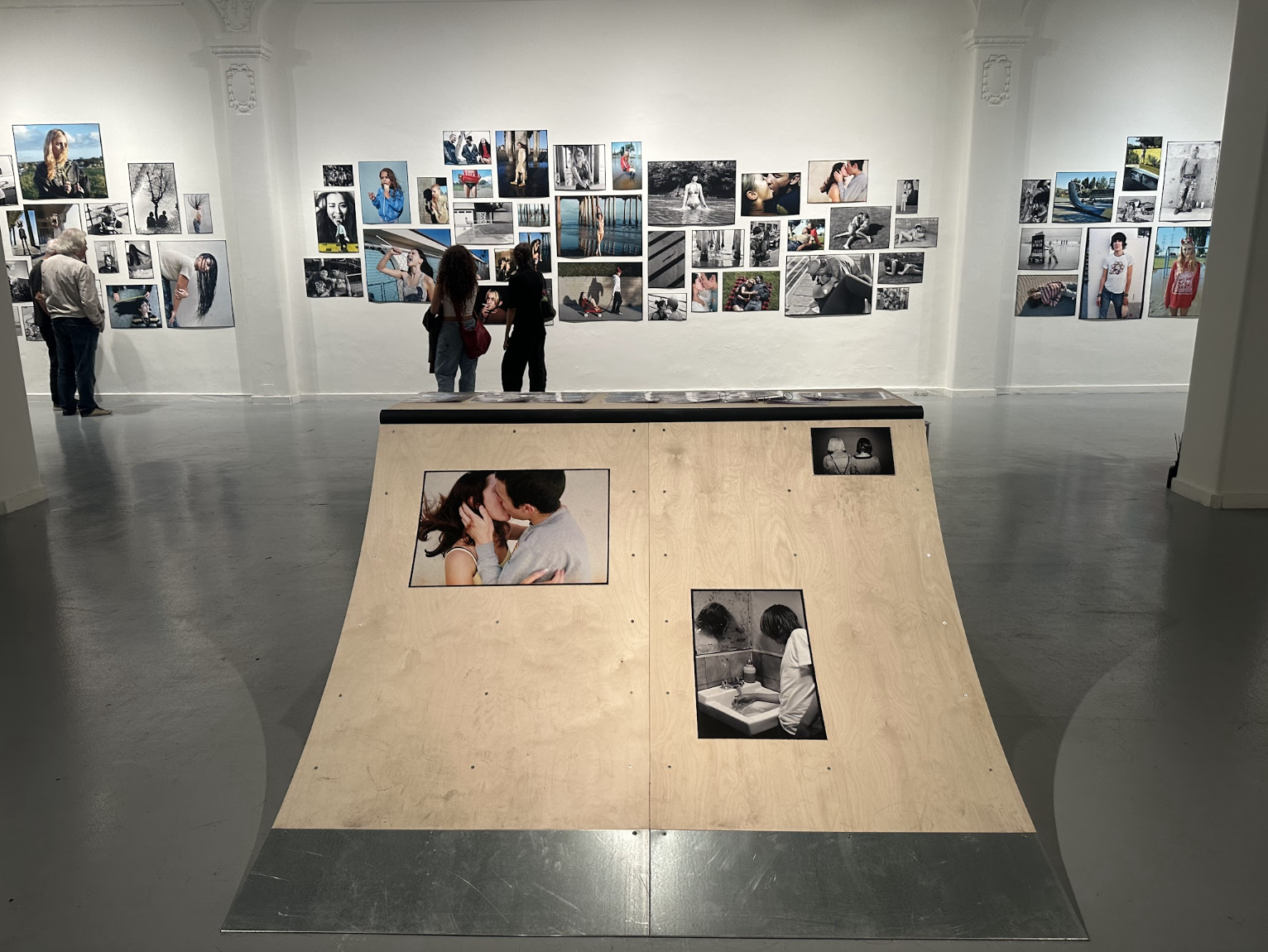
I rode a Lime bike to Espai Metrònom. Their scooters are prohibited by popular demand, but their brand still remains ubiquitous. Inside, other brands have recruited art into their orbit. Ed Templeton’s “Tomorrow Never Comes” grew from his collaboration with Bershka and Aries; Foto Colectania is a partner and Elisa Medde is its curator. The show has a different rhythm and economy. Templeton’s proximity to skate culture makes banality pleasing: people are kissing all over the place in his images. Bershka can put the work before an enormous clientele, including people unlikely to receive a gallery-opening invitation. And, the exhibition is free. Access here is real, and commercially useful. The open question that the brand aims to answer, through more of these exhibitions, is what cultural agency they can exercise through an infrastructure built to convert attention into consumption.
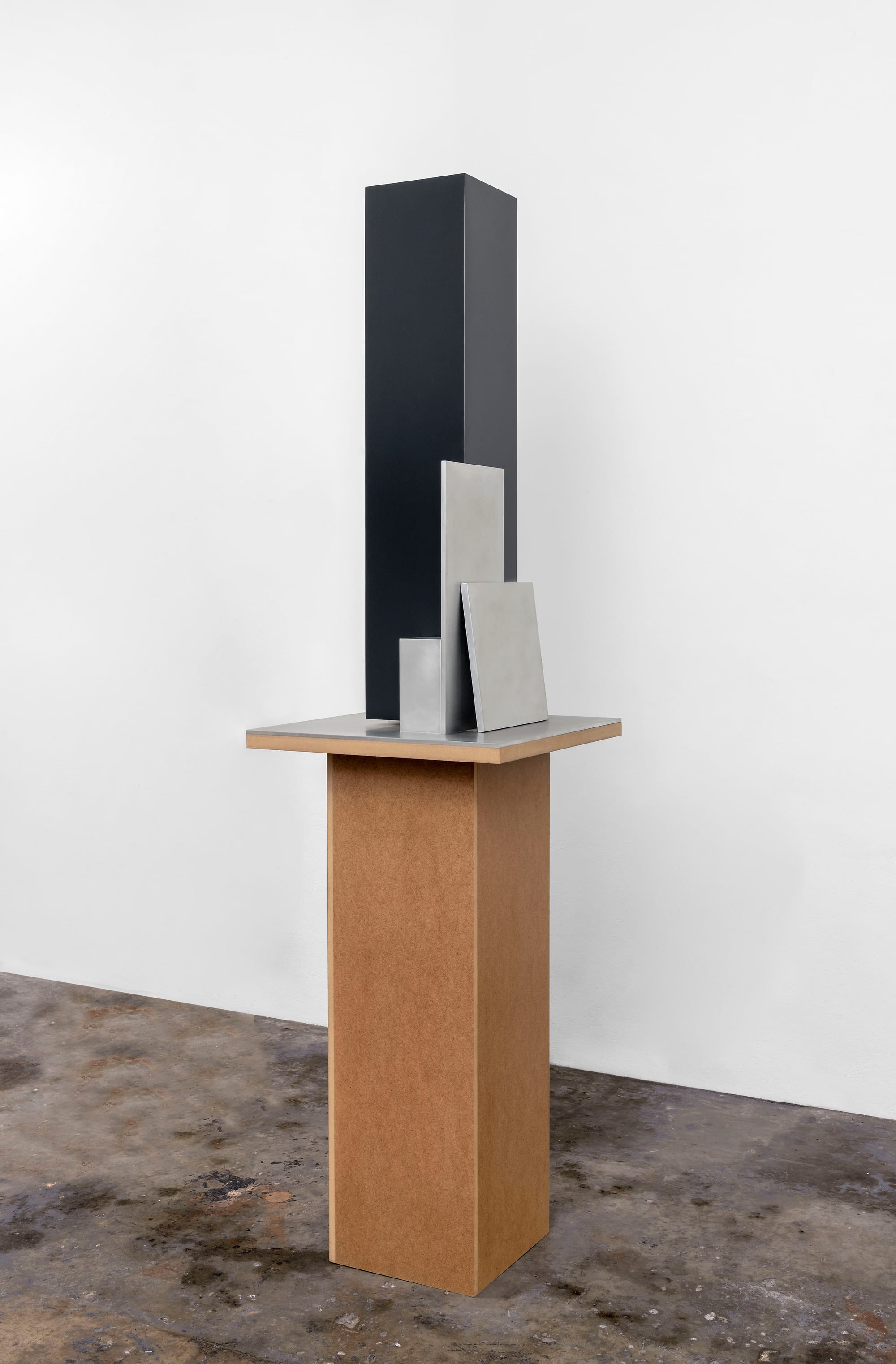
Compared with my previous visits for the LOOP Festival, where moving images and multimedia organize so much looking, this weekend returns repeatedly to sculpture, drawing, and the decisions a hand makes with material. At Zielinsky, Amparo Tormo’s Fosc (1994) makes me reconsider my enduring suspicion of the trappings of modernism. Her sculptures and drawings give shadow a role in constructing space; apparent absence determines what is present. Ten years ago, I might have called this kind of searching conservative. Now, I am suspicious of the speed of that judgement. Relevance is increasingly speculated on using data; attention can be counted before anyone says much about its quality. Ideology remains, enjoying the convenience of appearing as a form of measurement. Tormo makes me spend longer with something I thought I could identify quickly.
Her work carries me towards the new extensions of MACBA and MNAC, awarded to HARQUITECTES and Christ & Gantenbein. Two major institutions, two histories, one architectural partnership. A city can reasonably ask what range of imaginations gets entrusted with its future. Competitions do not exhaust that question. At MACBA, the architects describe meeting Richard Meier’s dominant building while joining a historic complex that had already been altered several times. They continue its structural habits—buttresses, alternating narrow and generous spaces—while keeping the front low, stepping the larger volume back and adding a public terrace.
“It’s more the syntax than the vocabulary,” one architect says, quoting Lluís Clotet. A building can learn how its neighbor is put together without dressing like it. I think of Miró studying Gaudí’s methods, and of the cactus in Galería Alegría. I begin longing for someone who can make something happen between the pieces.
The word “porous” keeps coming up. Ground-floor art with free access, a public terrace and circulation through previously closed spaces have practical consequences. A new square is described as a foyer for MACBA. Meier already gave the museum floor the same material as the terrace, where skaters now practice every day. Calling public space a “foyer” assigns it an institutional status, and institutions regulate behavior. Who will be allowed to act as though the square belongs to them?
This matters in a city where cultural investment and urban desirability are inseparable from pressures on housing and public space. Architecture can invite entry while the economy determines who can continue living nearby. Flexible rooms and generous connections can accommodate many museums; they can also postpone the question of whom the institution understands itself to serve.
At MNAC, its director Pepe Serra has little patience for treating expansion as simply a request for a bigger house. In his reading it is a site of negotiation and memory. Whole generations of artists can appear temporarily and disappear again. More space can keep them visible long enough for history to become intelligible. Serra’s account is full of interruptions: the Civil War, collections split up under Franco, the long work of bringing them back together. He insists on art made in Catalonia, a formulation roomier than a national label, and he refuses to treat chronology as natural. The Romanesque works are old; their rescue, acquisition, and assembly are very modern. Miró was looking at that inheritance while it was being made into one.
The Palau Victòria Eugènia will leave substantial interior decisions to the museum. Serra likes this; he likes the renderings considerably less. “These images are the devil,” he says. Materials and arrangements remain unsettled, while the attractive picture threatens to settle them prematurely.
Acquisitions, restorations and long-term deposits remain to be negotiated. Serra describes redirecting money from temporary programming towards the collection, and he is candid about private collectors: they kept buying where public institutions failed. The people whose lives I have briefly imitated at The One return as custodians of a history the museum cannot tell without them. Their capacity for enlightened self-interest matters within a system in which private wealth has acquired the power to determine what can later become public heritage. The issue reaches beyond individual benevolence: what public institutions could acquire, preserve, and show was shaped by political priorities and unequal concentrations of resources long before any gift arrives.
Serra wants a program that makes the project public while it can still change: let people see how the dish is cooked. Openness becomes consequential when somebody can enter early enough to disagree.
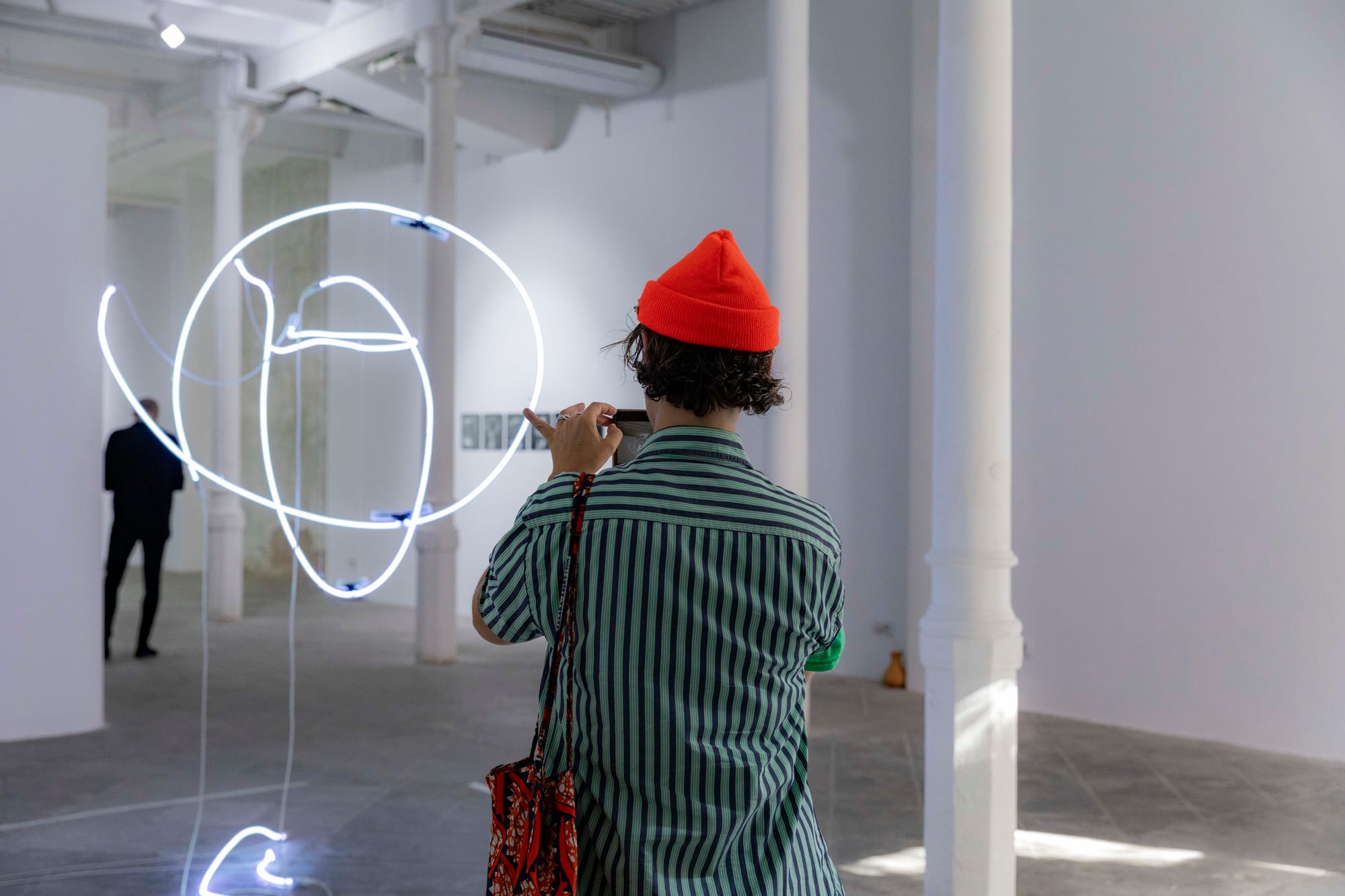
An evening invitation, an audience, and a room guarantee nothing. At Al-Tiba9, Pavel Korbička’s Dance Calligraphy wears me down. Luminous sculptures translate recordings of a dancer’s movements into spatial lines, yet the body’s differences between repetitions remain elusive. The site wavers between event venue and exhibition. Light produces atmosphere quickly; the room encourages the work to become a backdrop, and the work offers little resistance. Visibility comes easily here.
At Chiquita Room, I recover my attention. Laura González Palacios began Chiquita Ediciones in 2013; the gallery opened in 2018. Publishing, exhibitions, and a residency program remain part of a unified project. Before there was a room, there was a book to take away. Its humanist, feminist, and environmental commitments become legible through organization: how an artist is accompanied, how work circulates.
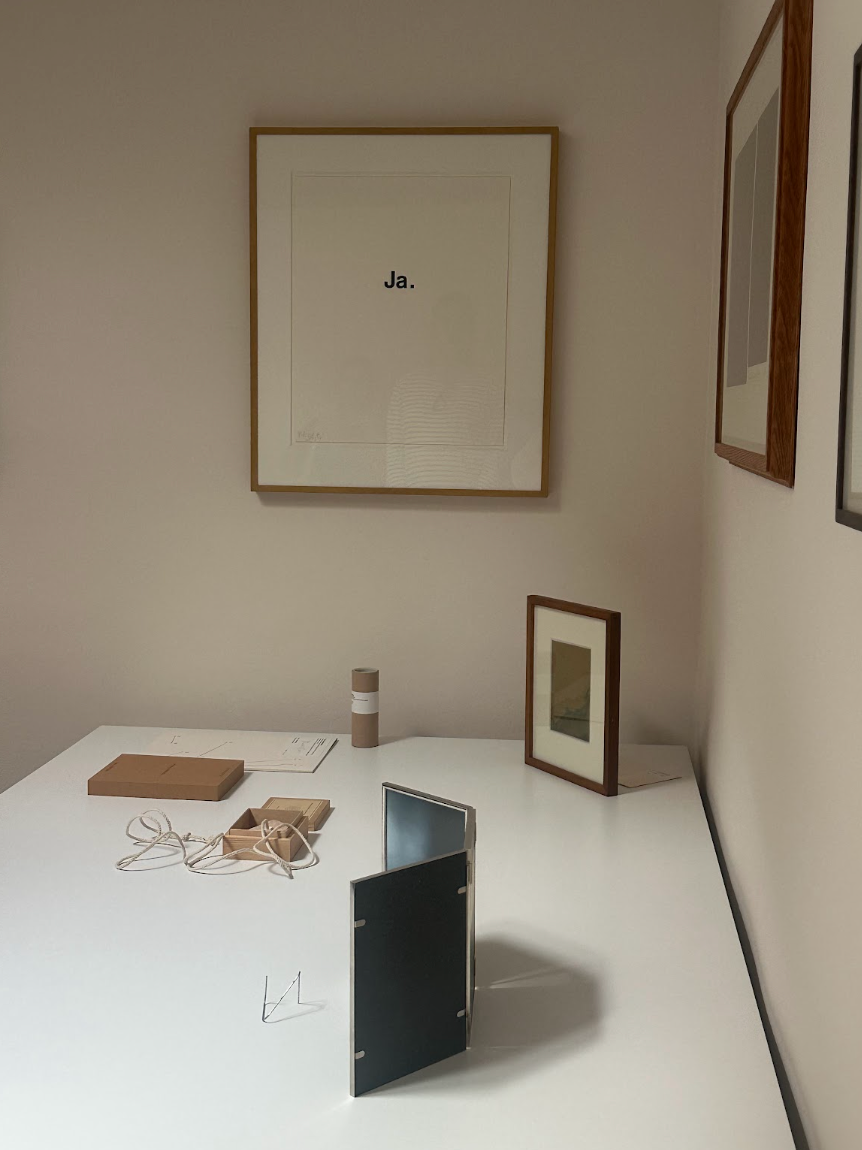
Pieter Laurens Mol’s Hook, Line and Sinker, part of the “Flash” program, gathers editions with the attraction of a cabinet. Mol made his first in 1967. Paper, metal, and image condense ideas into material forms whose substance participates in their meaning. In a site that formed its identity through publishing, the edition has its own reason to exist. Repetition allows circulation without reducing the object to an advertisement for something supposedly more important elsewhere. During a weekend organized around access to exceptional things, that matters.
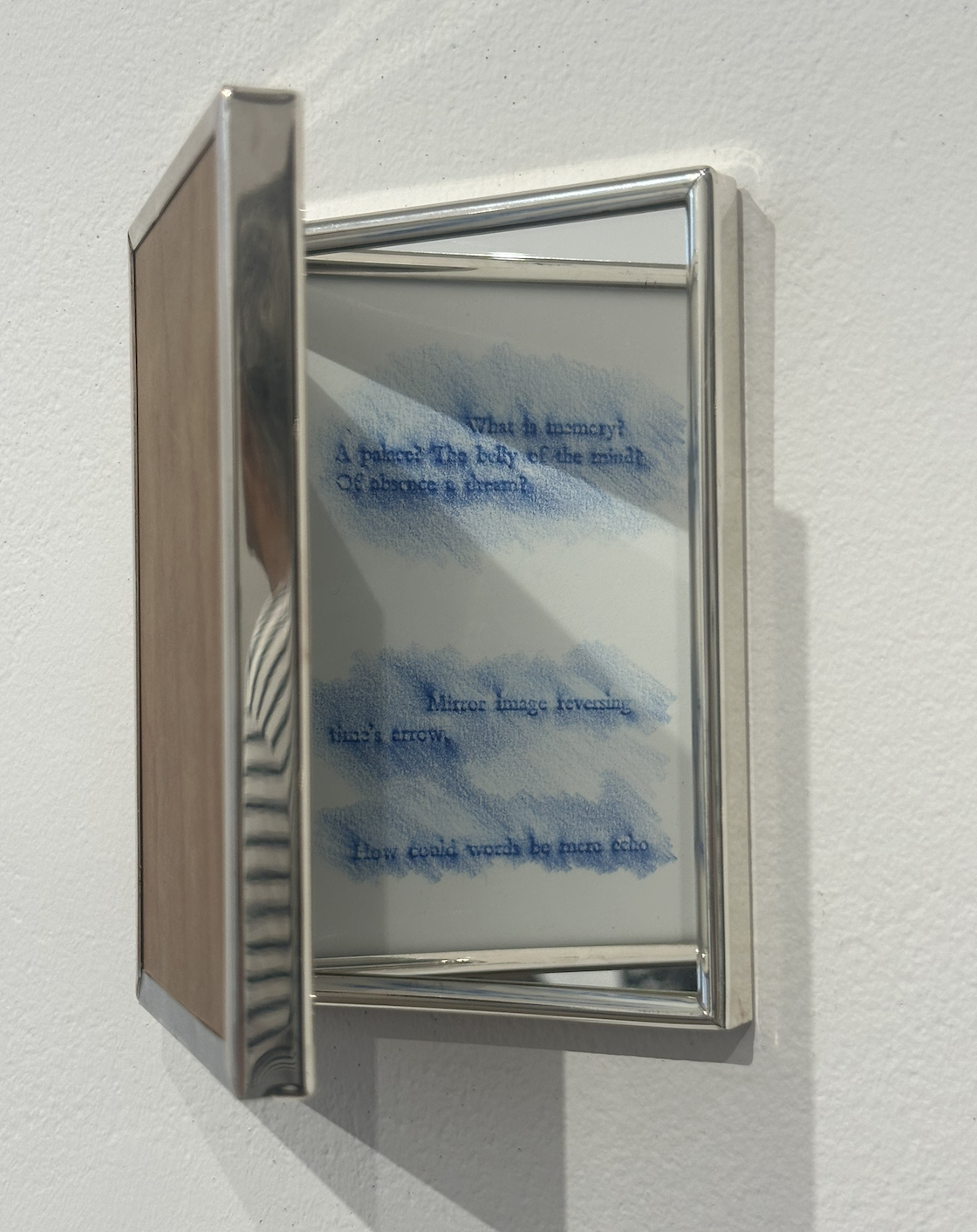
Laía Argüelles Folch’s Lo que tiene vuelo follows gestures passed through other hands, with all works exhibited being produced for the exhibition, and all ranging between €200 and €11,000. Found materials, revisited places, frottage, graphite, fabric, and recorded sound receive traces differently. Para Laía features her parents reading domestic notes the artist kept; messages transcend their practical purpose through voice. In Hinterhof, recordings from a Berlin courtyard enter only during the first and last half-hours of opening. I like the modest inconvenience: the work refuses my assumption that it will remain fully available whenever I arrive.
Chiquita has just opened a space in Brussels, pairing Mol and Argüelles Folch in “Once We Existed”: two generations, forty years apart, considering what remains of a presence and what another person can do with the traces it leaves. After the museum expansion, this smaller expansion persuades me because I can see what the conversation asked for another room.
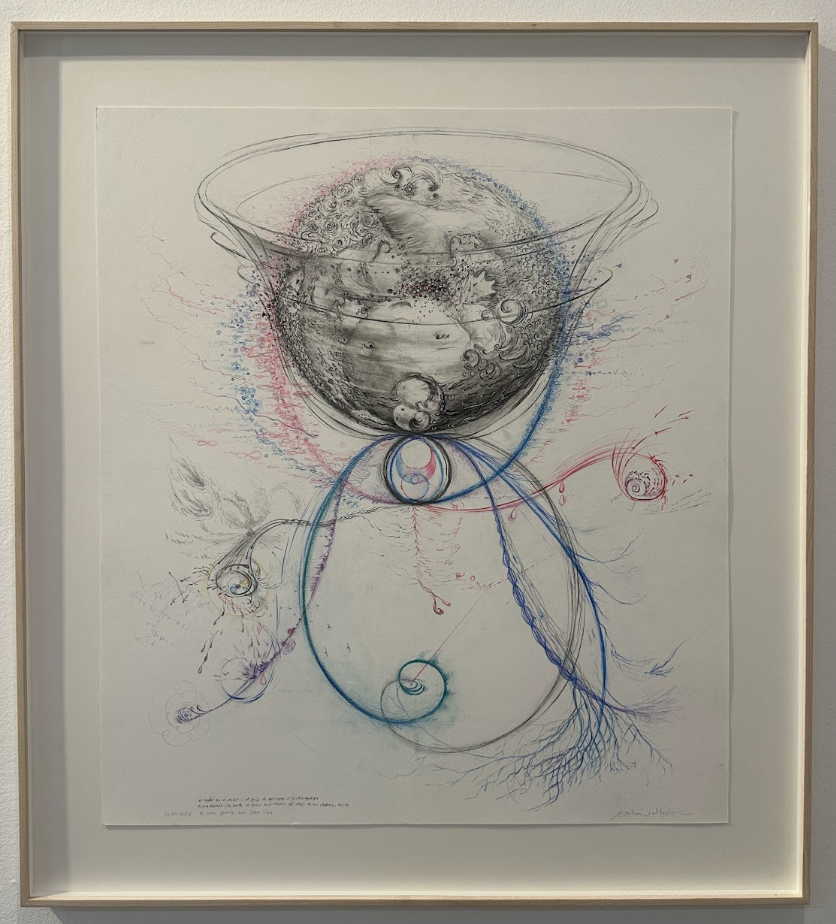
At Àngels Barcelona, Eulàlia Valldosera draws on what recognition itself can leave unseen. “Anima mundi. Pensamiento gráfico” gathers a decade of drawings and texts developed through what she calls “channelling”. While her installations circulated publicly, much of this work stayed in notebooks. Recognition can be selective enough to become blindness.
Her vocabulary includes energy, psychic bodies, and gestation. I can follow the labor of making those experiences communicable without adopting every claim. A clay bell, a natal form, and a glass embryo bring the cosmology into material proximity. The exhibition’s strength lies partly in showing work through which an artist is still finding her terms of expression. Valldosera allows that risk to remain visible.
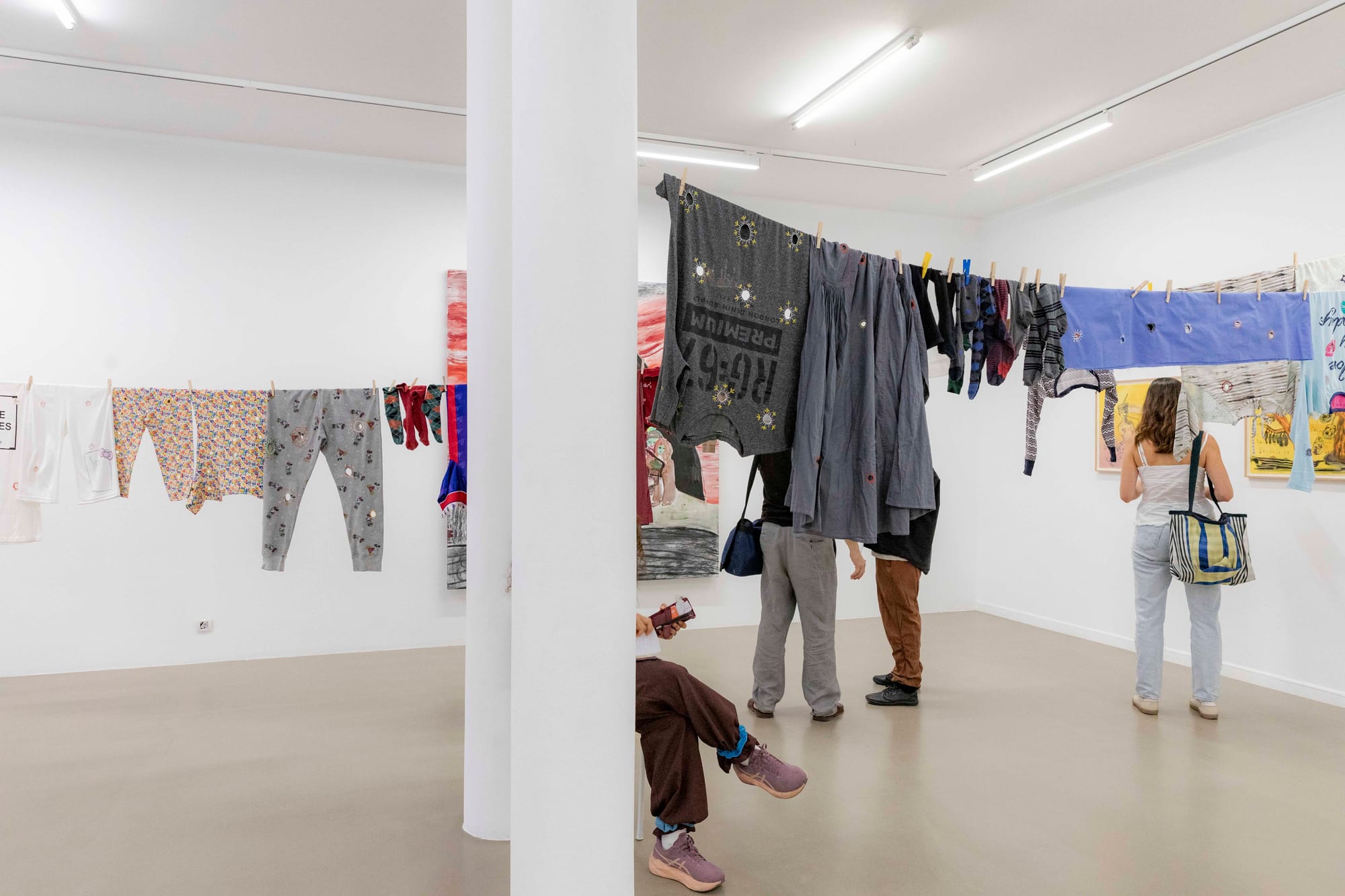
At Bombon Projects, Mounira Al Solh’s Yalla Tnam, Yalla (2025) returns me to my night at The One. During the Lebanese Civil War, unable to sleep through bombing, Al Solh tore holes in her pyjamas; her mother encouraged her to embroider around them. She later developed the gesture collectively with women in Lebanon and the Netherlands. The holes stay open, but thread gathers around them. Activity that made fear bearable here does not preclude that fear’s cause. I remember calling Barcelona’s thunder “theatrical” above. Safety allowed me that pleasure. Al Solh makes such permission perceptible through a stitch: its time, concentration, and the enduring opening. History reaches me through the intimacy of the gesture.
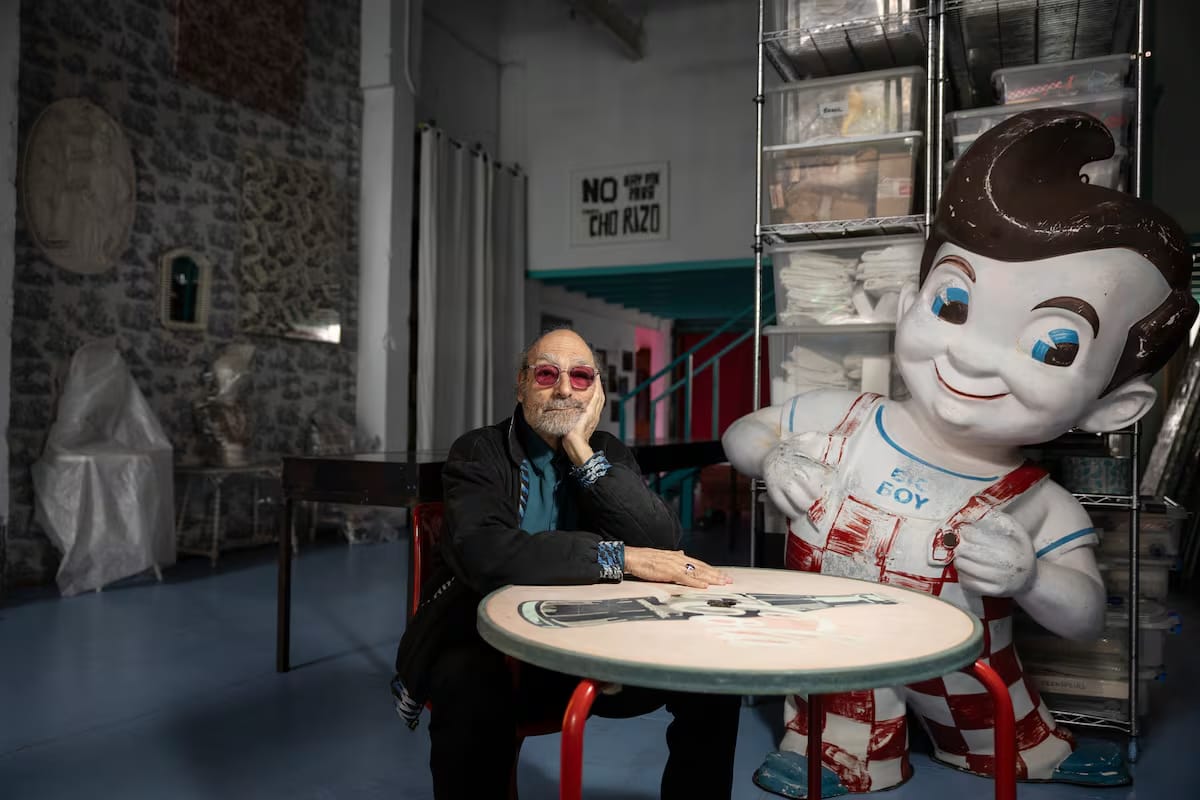
At FoodCultura in Poblenou, Palmadotze’s “Miralda: Archivo Open” brings the artist’s working environment, where food, ritual, and popular culture have fed into (and upon) one another for decades. Infinity Tables, Sant Stomak (2026), here solemnity and ridiculousness share cutlery.
Miralda makes eating a way of examining how people organize themselves. Ceremony carries pleasure and power together: someone prepares the meal; someone is invited; someone decides what belongs on the table. Hospitality is one way art reaches us, and one way a scene establishes who is expected to be present. Price matters, alongside invitation, professional access, leisure time, transport, housing, and the confidence to enter. Gentrification works through these accumulations, too: through the conversion of neighborhoods into destinations and of culture into evidence of desirability. The people whose labor gives a place its texture are increasingly required to pay for the value they helped produce.
I finish at Museu Tàpies with “Àngel Jové. De intactu”, curated by Maria Josep Balsach. After a weekend of inquiries and observation, to encounter an artist who continues making work, largely out of view, makes the machinery of attention newly visible, and makes me want to meditate surrounded by his charcoal drawings. Jové stopped giving his works the reassurance of titles and dates. I understand the refusal through a sense of the horror that keeps returning with history. A date can make an event seem safely past; a name can suggest containment. Horror exceeds those boundaries. History repeats, and the image refuses to stay where we’ve filed it. Other artists might have expected withdrawal to end in abandonment. Jové kept working and kept much of it for himself. The exhibition makes that persistence public, although its existence never depended on our arrival.
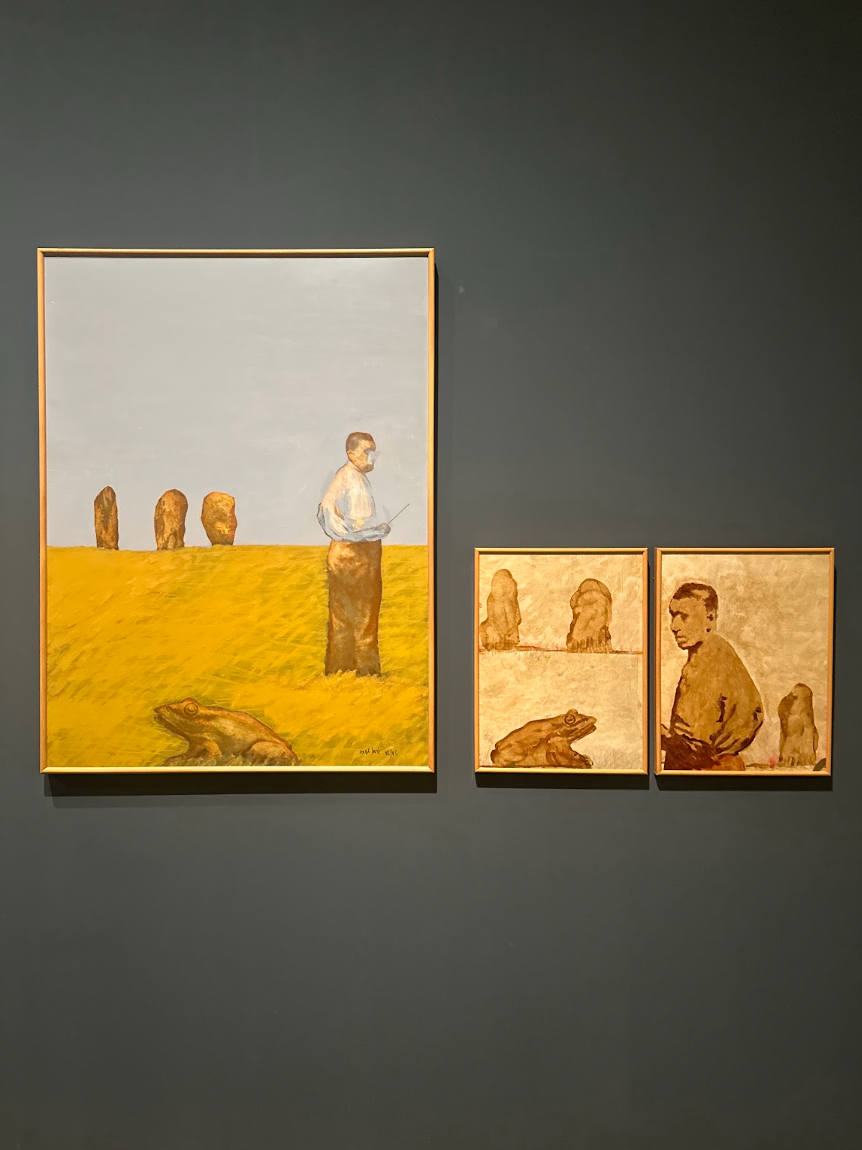
Barcelona knows how to make art visible once its importance has been agreed upon. The Gallery Weekend has shown how much infrastructure stands behind that agreement: artists looking at artists, galleries taking early risks, brands manufacturing reach, collectors holding what museums could not buy, institutions reorganizing public space, hotels selling the city back to itself as an experience, and neighborhoods carrying the cost of becoming desirable. Jové’s example is instructive; through it all he kept making, not seeking the external gaze. Yet the question of who has stopped looking and who has just started stays with me.
//