We are delighted to announce the upcoming programme series Worlds in Repair. Taking place from 11 to 22 December 2026, the series will unfold across various locations in Berlin, including Studio 1, Kunstquartier Bethanien, Kindl – Centre for Contemporary Art, and public spaces.
The program series Worlds in Repair, comprising an exhibition, a symposium, and a public program in Berlin, Germany, draws on diverse knowledge practices to explore different forms of repair and reparation — not as a means of returning to a previously “intact” past, but as gestures of resistance and self-assertion. Repair is understood as inseparable from questions of justice and responsibility, addressing the transgenerational effects of historical violence, displacement, and the destruction of cultural heritages.
Following this approach, the format aims to claim new relationships between bodies, histories, and worldviews, taking individual and collective memories into account. The term “worlds” reflects the multi-layered and multidirectional nature of these approaches. We are dedicated to the diverse histories of antiquity and their critical revision, language in its many forms, flight and migration movements and their lasting consequences, as well as the formation of friendships and alliances between local and international communities. The project connects the arts and sciences as anti-hegemonic, decolonial, solidarity-based, and empathetic knowledge formations, bringing together the mythologies of ancient worlds, non-Western cosmologies, and the complex and troubled legacy of the Enlightenment with commitments to equality, liberation and freedom.
The works presented in the exhibition, the contributions to the symposium, and the programme in public space reflect on the central themes of repair, reparation, and justice. Particular attention is given to confronting colonial violence, its narratives, remembrance, and commemoration, its enduring consequences in the present, and the necessity of collective acts of resistance.
The programme is conceived as un-disciplinary, foregrounding the equal exchange of knowledge and experiences beyond disciplinary frameworks.
Participants
Ayman Alazraq, Kerylos Aziz, Ariella Aïsha Azoulay, Memory Biwa, Debasish Borah, Marc Da Costa, Nikita Dhawan, Forensic Architecture and Forensis, Šejla Kamerić, Madeleine Kneissig, Ewa Majewska, Abdessamad El Montassir, Yara Mekawei, Ciraj Rassool, Elena Sinanina, Sonya Schönberger, Kamala Vasuki (Vasuki Jeyasankar).
As well as contributors from the Städtische Galerie im Lenbachhaus und Kunstbau München: Mona Feyrer, Lisa Kern; and the Provenance Lab, Leuphana University Lüneburg: Lynn Rother, Claudia Andratschke, Agustina Andreoletti, Nnenna Onuoha.
Curation Elena Sinanina with Sandeep Sodhi and team Curation Outside Eye Madeleine Kneissig Project Management Jasna Witkoski, Carina Panther Technical Direction Christopher von Nathusius Graphic Design Bardhi Haliti Press Relations Rafael Sergi Production Management Elisa Maria Schmitt Photography Lutz Knospe
Worlds in Repair is an un-disciplinary program series funded by the Capital Cultural Fund (HKF) and by the Friedrichshain-Kreuzberg District Office as part of the Integration Fund, a district-level neighbourhood program, using funds from the Senate Department for Labor, Social Affairs, Gender Equality, Integration, Diversity, and Anti-Discrimination. Supported by Goethe-Institute. In cooperation with Kunstraum Kreuzberg/ Bethanien and Kindl – Centre for Contemporary Art.
Institutional partners: Städtische Galerie im Lenbachhaus und Kunstbau München and Provenance Lab at Leuphana University Lüneburg.
Produced by Initiative BLACK LAND e. V., a Berlin-based non-profit organization dedicated to promoting art and culture, chaired by Elena Sinanina and Yara Mekawei.
The programme will be held in English.
OPENING PROGRAMME
11 December 2026
13:30 Debasish Borah, Is this the Museum of European Civilisation? — Lecture Performance
Location: Sanchi Gate, in front of the Humboldt Forum, Schloßplatz, 10178 Berlin
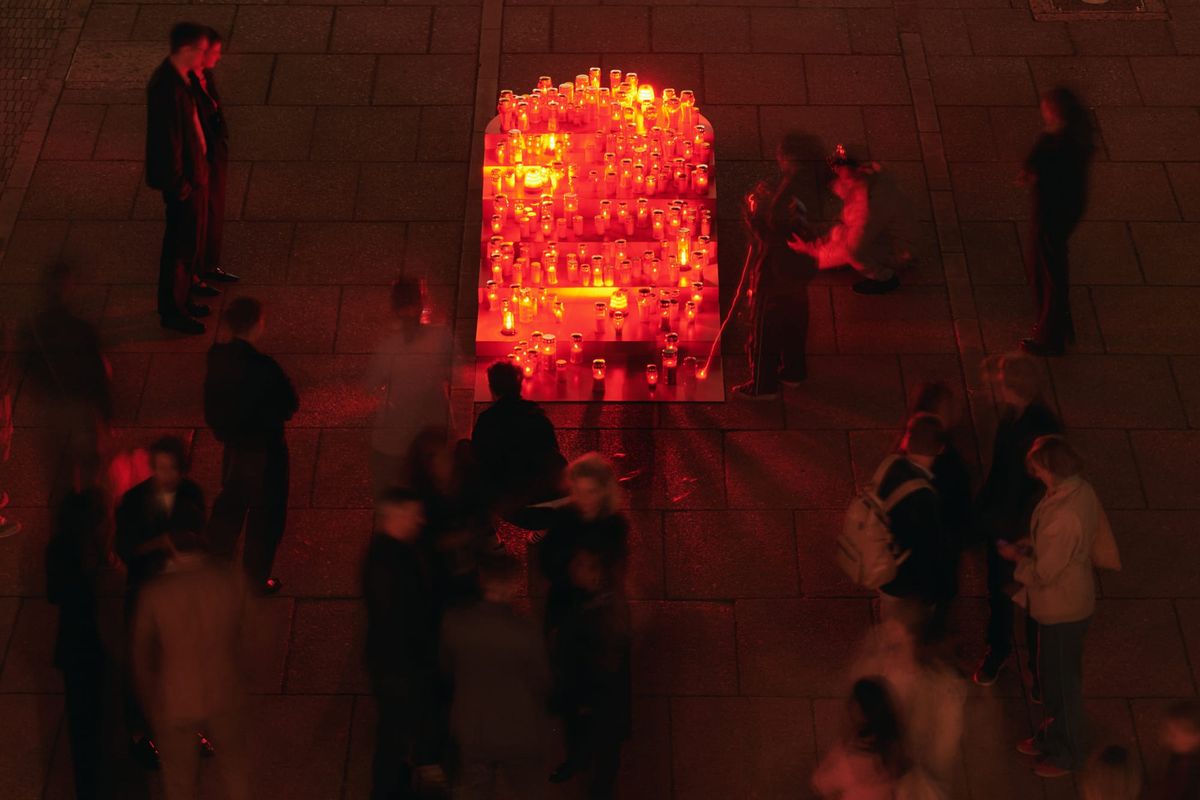
16:30–20:00 Šejla Kamerić, AWAKE — Performative Installation
Location: Mariannenplatz, in front of Kunstquartier Bethanien
18:00 Exhibition Opening
Location: Studio 1, Kunstquartier Bethanien, Mariannenplatz 2, 10997 Berlin
19:00–20:00 Performance by Yara Mekawei and Kerylos Aziz
Location: Studio 1, Kunstquartier Bethanien, Mariannenplatz 2, 10997 Berlin
12 December 2026
11:00–12:00 Guided Tour with Kerylos Aziz, Egyptology, Archaeological Sites in Egypt and Traces of Hatshepsut in Berlin
Location: In front of Dussmann das KulturKaufhaus, Friedrichstraße 90, 10117 Berlin; Museum Island; and in front of the Neues Museum, Bodestraße 1–3, 10178 Berlin
Symposium
Location: Kindl – Centre for Contemporary Art, Am Sudhaus 3, 12053 Berlin
Admission from 14:00, programme begins at 14:30 with an introduction.
15:00–17:00 | Panel Discussion
Enlightenment, Colonial Plunder, the Return of Hatshepsut
Prof. Dr. Nikita Dhawan, Kerylos Aziz, Elena Sinanina, Yara Mekawei
17:15–18:00 | Presentation and Conversation Städtische Galerie im Lenbachhaus and Kunstbau München
Mona Feyrer and Lisa Kern
13 December 2026
Symposium
Location: Kindl – Centre for Contemporary Art, Am Sudhaus 3, 12053 Berlin
Admission from 9:30, programme begins at 10:00.
10:00–12:00 | Panel Discussion Mythologies, Biographies, the Ghosts of Colonialism
Sonya Schönberger, Kamala Vasuki, Šejla Kamerić, Prof. Dr. Ewa Majewska
12:15–14:15 | Panel Discussion Colonialism, Architecture, Archive
Ayman Alazraq, Prof. Dr. Ciraj Rassool, Dr. Memory Biwa, Dr. Debasish Borah
15:00–17:00 | Presentation and Conversation Provenance Lab, Leuphana University Lüneburg
Agustina Andreoletti, Nnenna Onuoha, Prof. Dr. Lynn Rother, Dr. Claudia Andratschke
17:15–18:00 | Film Screening
Ariella Aïsha Azoulay, Palestine is there, where it had always been (2026)
18:00–19:45 | Discussion and Closing Session
Exhibition
11–21 December, Studio 1, Kunstquartier Bethanien
The exhibition brings together a selection of new and existing works by international artists and collectives, engaging in a dialogue across different practices and perspectives.
Sound artist Yara Mekawei presents a new composition and installation, developed in collaboration with Egyptologist Kerylos Aziz, exploring the histories and legacies of the ancient Egyptian pharaoh Hatshepsut.
Marc Da Costa presents a new video work examining the visual representation of Western imperial archaeological excavations in digital contexts. The work questions the evidentiary value of images circulating in the public domain, their significance for museums and academic research, and the implications of the growing influence of artificial intelligence.
In her new installation, Sunset Blue, 2026, artist and historian Memory Biwa addresses the genocide of German colonial rule in Namibia through dissonant fragments of the Blue Book, and related oral histories and embodied archive to invoke the continous cycle of resilience and claims for reparative justice.
In The Lost Tapes of a People’s Tribunal, 1982, Ayman AlAzraq presents newly found video recordings from a people’s tribunal in Oslo after the Sabra and Shatila massacres, alongside photographs, slides, and documents. Through a spatial installation, he explores how neglected archives and personal testimonies keep memories of political violence alive and carry demands for justice across generations.
Drawing on oral testimony, archival records, and digital landscape reconstructions, the research agencies Forensic Architecture and Forensis, working in partnership with the Nama Traditional Leaders Association and the Ovaherero Traditional Authority, investigate the cumulative and enduring legacies of German colonialism and the genocide of the Ovaherero and Nama, tracing environmental degradation and land dispossession and supporting demands for environmental reparations and land restitution.
With her site-specific light installation AWAKE, which will be presented in Berlin for the first time on 11 December to mark the opening of the Worlds in Repair programme, artist Šejla Kamerić creates a space for collective remembrance and quiet solidarity, calling for vigilance, empathy, and collective responsibility.
In his film Galb’Echaouf, Abdessamad El Montassir presents the landscape of Western Sahara as a repository of suppressed memories, where stones, plants, and oral histories bear witness to violence, displacement, and resistance beyond official historical narratives.
The Berlin-based artist Sonya Schönberger examines, in collaboration with Christof Zwiener, how material remnants of the Second World War in Berlin preserve individual memories, life stories, and traces of destruction. In her installation Scherben (Shards), she works with fragments of glass, ceramics, and porcelain from everyday objects recovered from Berlin’s rubble mounds.
In War Damage Maps, Sonya Schönberger engages with war(s), documentation, and collective memory through cartographic records of the destruction of various German cities as collateral damage of the Second World War.
Artist, feminist, and human rights activist Kamala Vasuki (Vasuki Jeyasankar) creates an installation commemorating those who were forcibly disappeared as a result of war and violence in Sri Lanka and whose whereabouts remain unknown to this day. The work also invites visitors in Berlin to engage with these memories and histories that have been suppressed or silenced.
Information and Opening Hours
Installation AWAKE: 11 December, 16:30-20
Exhibition
11 December 2026: 18:00–20
12–21 December 2026: 10:00–18:00
Curatorial Tours: 15–21 December 2026, daily, 13:00–14:00, no registration required
Admission-free
Symposium
12 December 2026: 14:30–18:00
13 December 2026: 10:00–19:45
Tickets
Tickets are available at www.blackland.berlin. Reduced tickets are available for high school and college students, apprentices, unemployed people and people with disabilities (with a “B” designation on their disability ID) and their companions.
Free entry, no ticket required: exhibition, AWAKE installation, performance by Yara Mekawei and Kerylos Aziz (11 December) and curatorial tours.
Addresses
Studio 1, Kunstquartier BethanienMariannenplatz 2, 10997 Berlin
Kindl – Centre for Contemporary Art (Maschinenhaus)Am Sudhaus 3, 12053 Berlin
Sanchi Gate, in front of the Humboldt ForumSchloßplatz, 10178 Berlin
Tour locations:In front of Dussmann das KulturKaufhaus, Friedrichstraße 90, 10117 Berlin; Museum Island; and in front of the Neues Museum, Bodestraße 1–3, 10178 Berlin.