SWAB Barcelona (October 8-11) opened under a sky full of thunder and within the organizational pulse of the housing struggle that has traversed Spain since September 23, when 87-year-old María del Carmen Abascal was evicted from her home in Madrid. The protests that followed won her the right to return. On October 8, the day the fair opened, she died in a hospital bed, never having crossed her threshold again. She became the symbol of a broader and deeper crisis, one in which questions of staying and of return are not rhetorical.
Reading through that threshold, the fair raises unavoidable questions. What does it mean to organize an art fair in a city, and a country, where the right to a dwelling is under attack? Can SWAB, like any fair, an institution so often based on transience, speak about habitability without extracting from it?
Founded twenty years ago by Joaquín Díez-Cascón, SWAB has been under the direction and curation of his daughter, Carolina Díez-Cascón, since 2025. Under Carolina, the fair has put younger artists and independent spaces at the forefront, emphasizing the urgency not only of visibility but of building a solid economic ecosystem around emerging practices. This is evident at the entrance. The Palau Victòria Eugènia at Fira Barcelona Montjuïc was filled with an audience of striking variety and a joyful and pluralistic overtone. Barcelona galleries mingled aesthetically, discursively, and physically with international realities, grouped by urgency, locality, and potential forms of alliance rather than by market hierarchy. The effect was less of a showroom than of a building with many neighbors dwelling on different “curatorial floors”.
Polar and Tropics
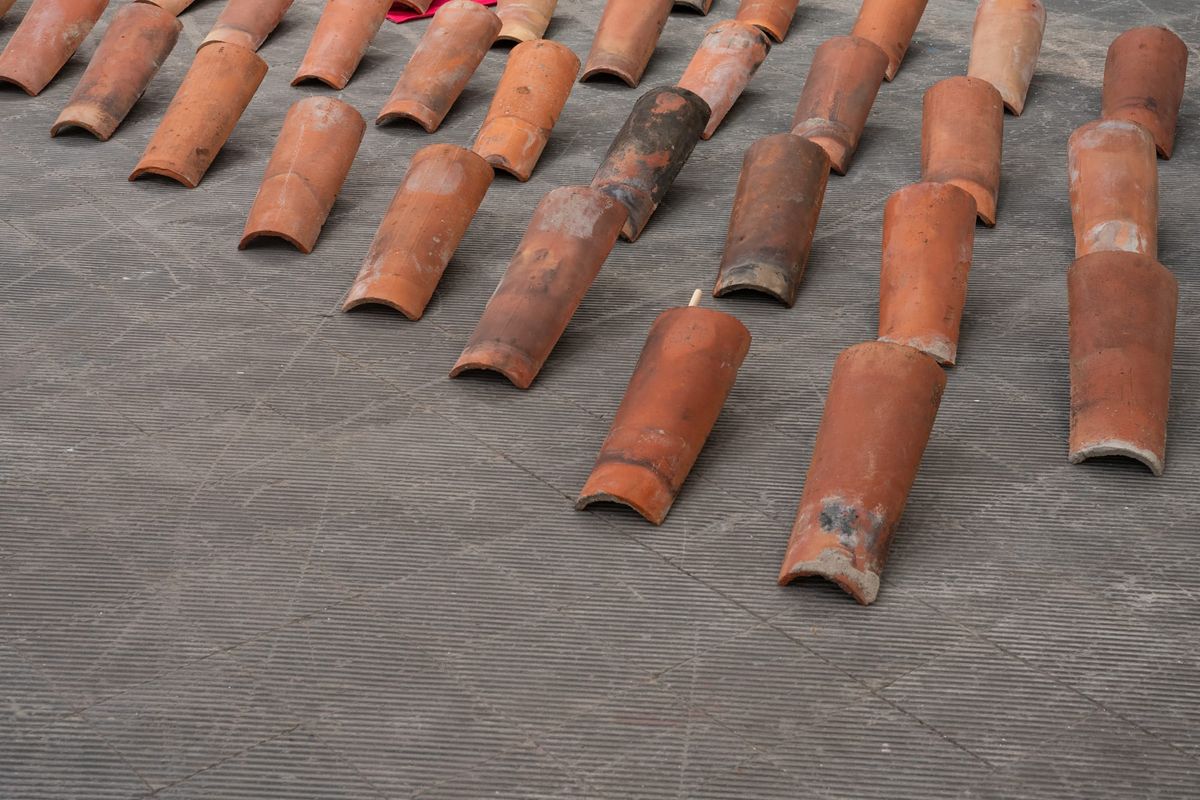
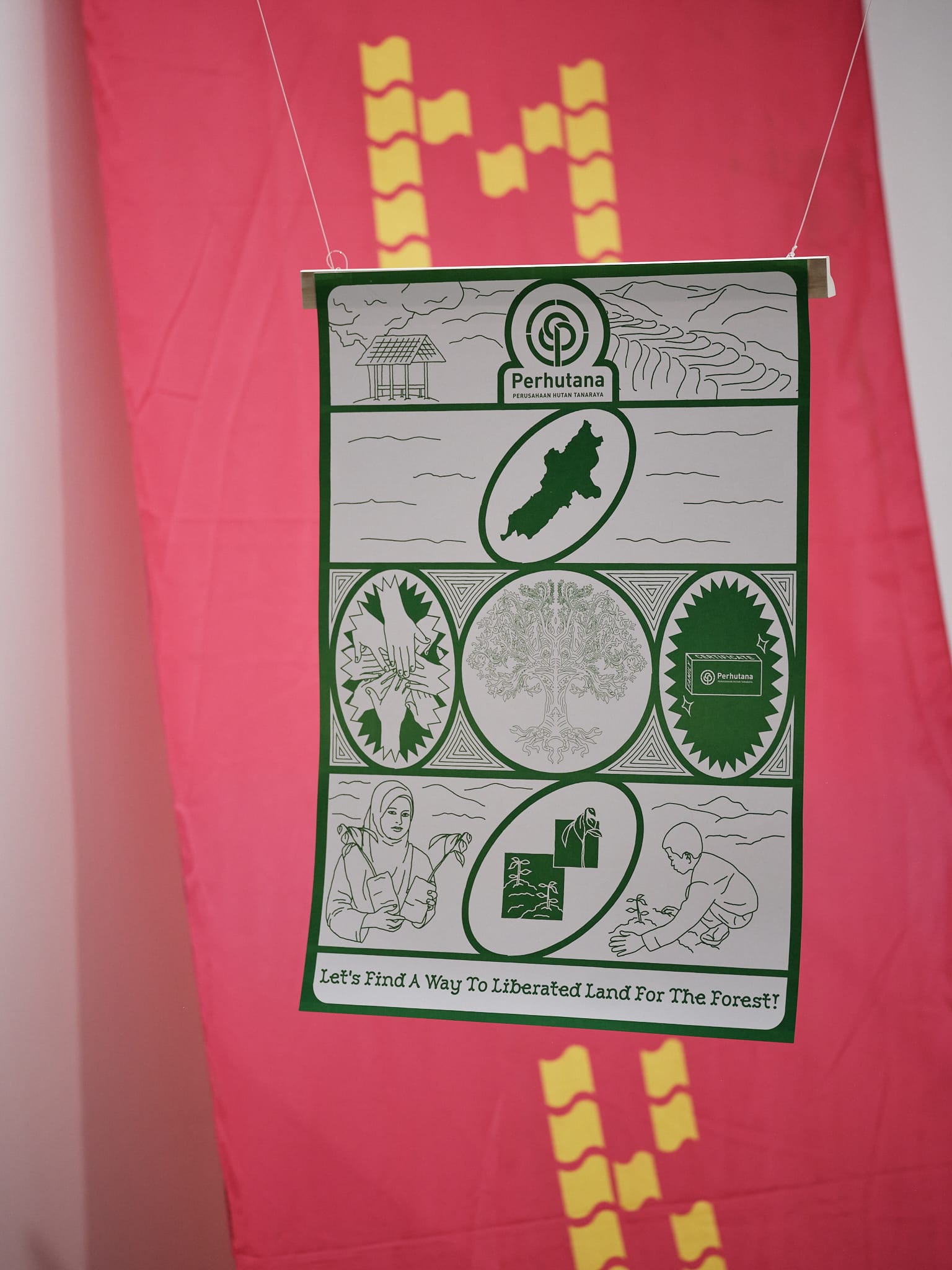
At SWAB, the curatorial axis “Polar and Tropics” brought together collectives from local, Nordic, and Southeast Asian contexts, distant geographically and politically yet articulating interlocking networks of solidarity. Among them was the Jatiwangi art Factory (Majalengka), established in 2005 as a community that embraces contemporary art as part of the discourse of local life in a rural area. Jatiwangi is a place of terracotta roof tiles, the very material of shelter. Its project Kota Terakota proposes remodelling the city according to its people’s desires and collective agreement, speaking of “terra” not only as matter but as land, territory, and idea. In Rampak Genteng, residents turn roof tiles into an instrument and a site of gathering: in 2012, more than a thousand people sounded their tiles in unison. At SWAB, the work appeared as a video and a banner installation, a quiet insistence on the need to reclaim land and roots.
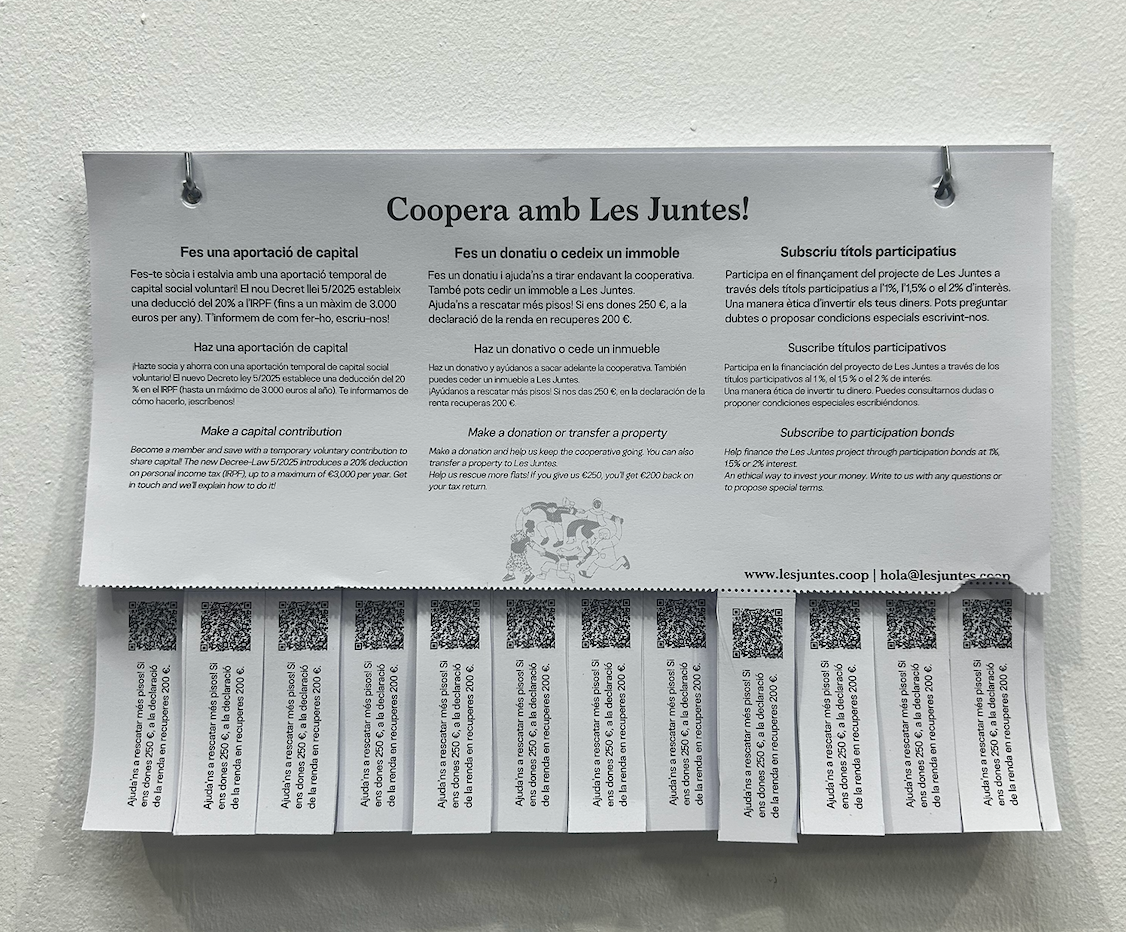
The Barcelona-based LaFundició presented Les Juntes, a cooperative project devoted to housing rights in the working-class neighborhood of L’Hospitalet. The cooperative obtains state money to purchase houses that would otherwise land in private hands, and redistributes the flats to people in need. In a week marked by Abascal’s death, it hardly seems like a “project”. It was a counter-model of property, treating housing as a common-pool resource rather than an asset, and returning the commons amid the theft of ownership.
Vortex and OFF-SITE
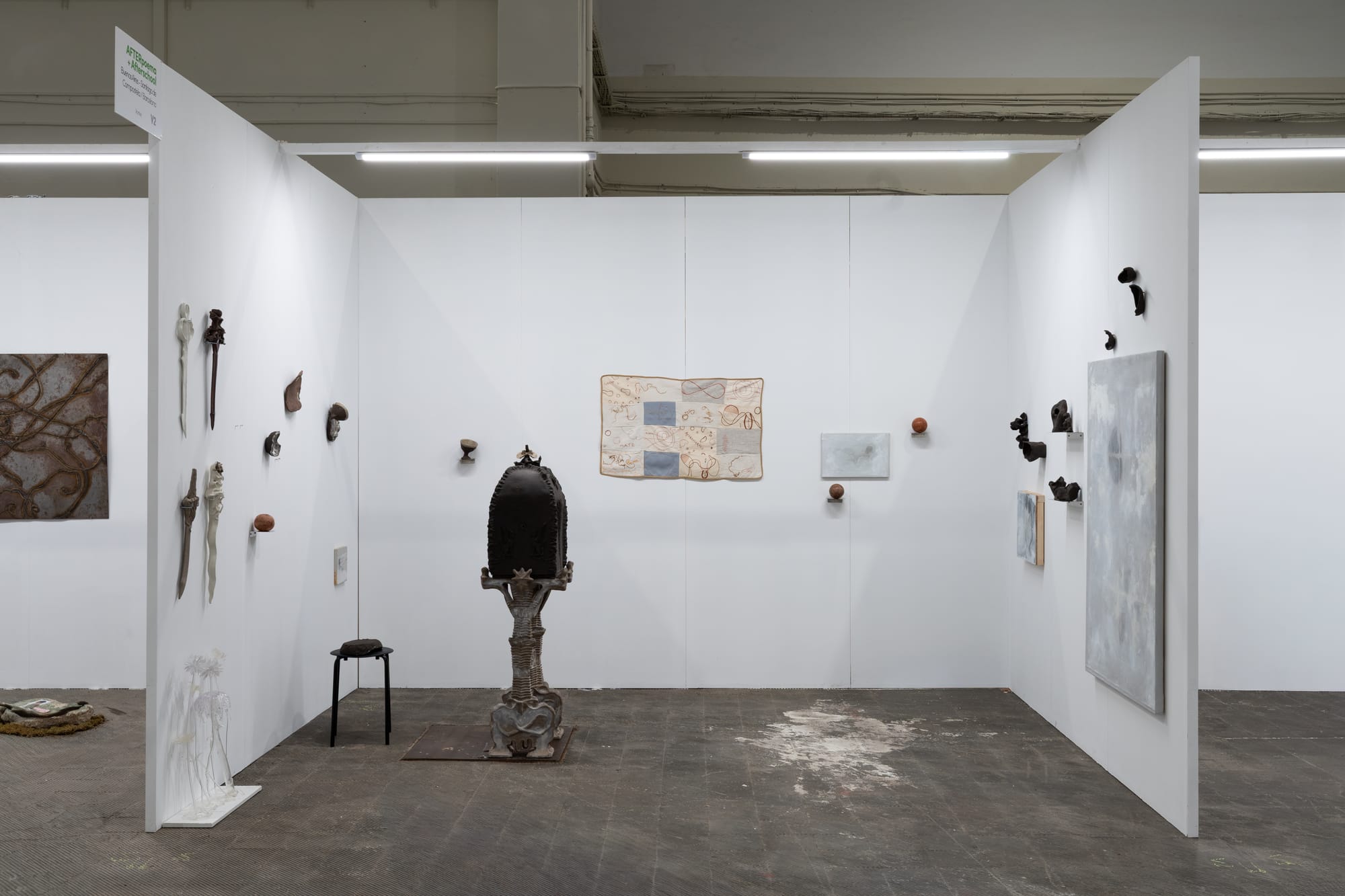
The “Vortex” section of the fair looked toward Latin America, building bridges between territories shaped by historical and colonial legacies. Afterschool sharing space with AFTERpoema (Buenos Aires – Santiago de Compostela), presented the group show “The Witchcraft Supper” with Clay Witches, Mary LeRanch, Eric Iocco, Urania Hadal, Iris Sanmartin and Mar Villeyra stood out, with artists transposing medieval symbols of power and mystery, such as swords, horses, and crystal flowers, into contemporary society and tracing the hermetic symbols of centuries-old underground movements and the architecture that housed them. Afterschool itself, visited on one of the fair’s organized tours, is a former school in Barcelona that once served as an educational center for migrant and working-class communities and is now reimagined as an open forum for encounter, learning, and self-managed cultural production. A building keeps its memory, and a good use of it stays faithful to those it once sheltered.
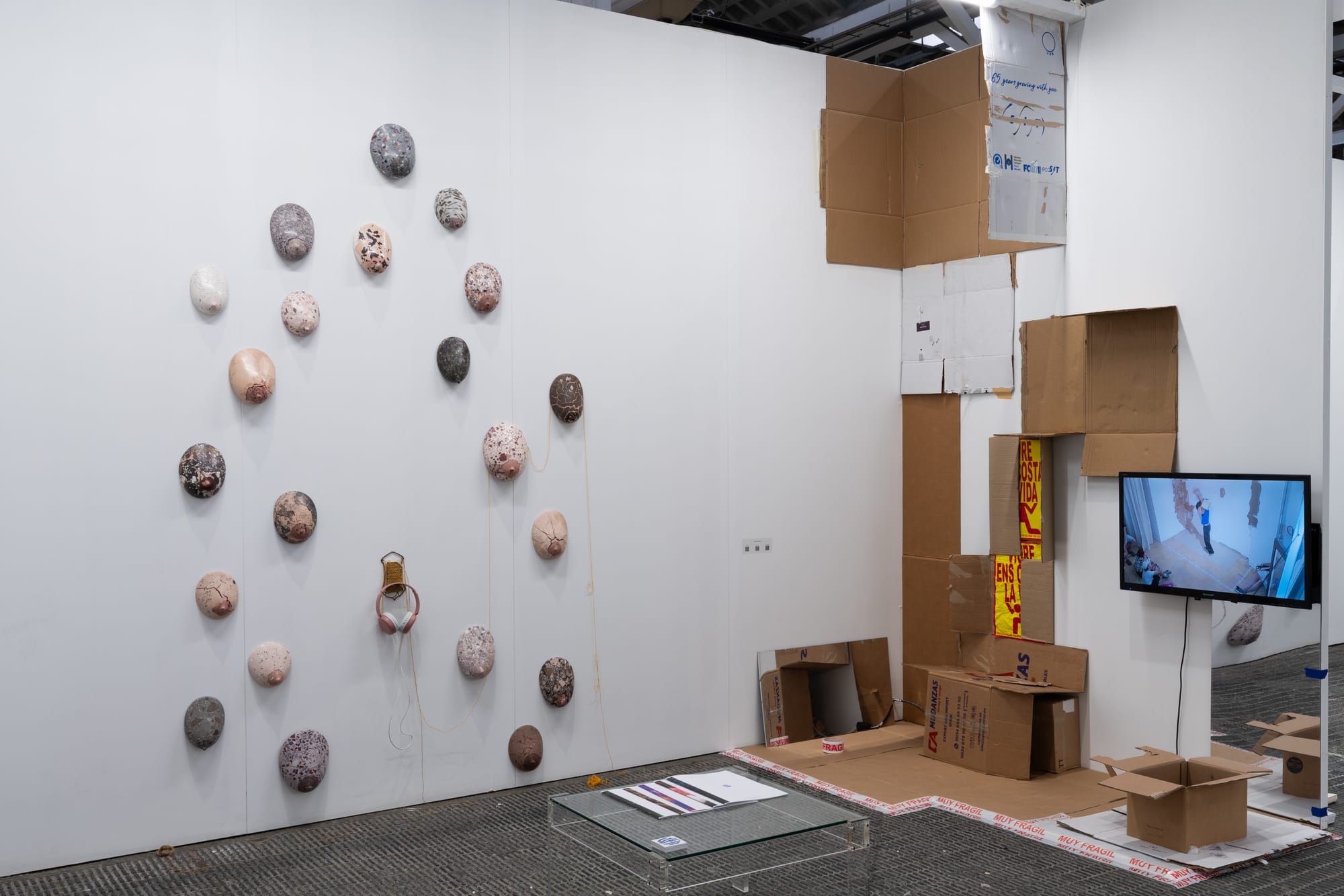
The same impulse runs through OFF-SITE, SWAB’s new program for independent spaces that reactivates the residual and the disused as loci of production, exhibition, and encounter, a direct riposte to the spatial extractivism squeezing so many contemporary cities. Within OFF-SITE, CasCaDas (CCD) ArtSpace presented “Porous Practices”, with Jimmy Paez, Jessica Angima, Agnieszka Bułacik, and Paweł Matyszewski, alongside the artist-led network VSG. Matyszewski’s marble breasts, peeking from the walls, evoked architecture as a voluptuous body.
MYFAF (My First Art Fair)
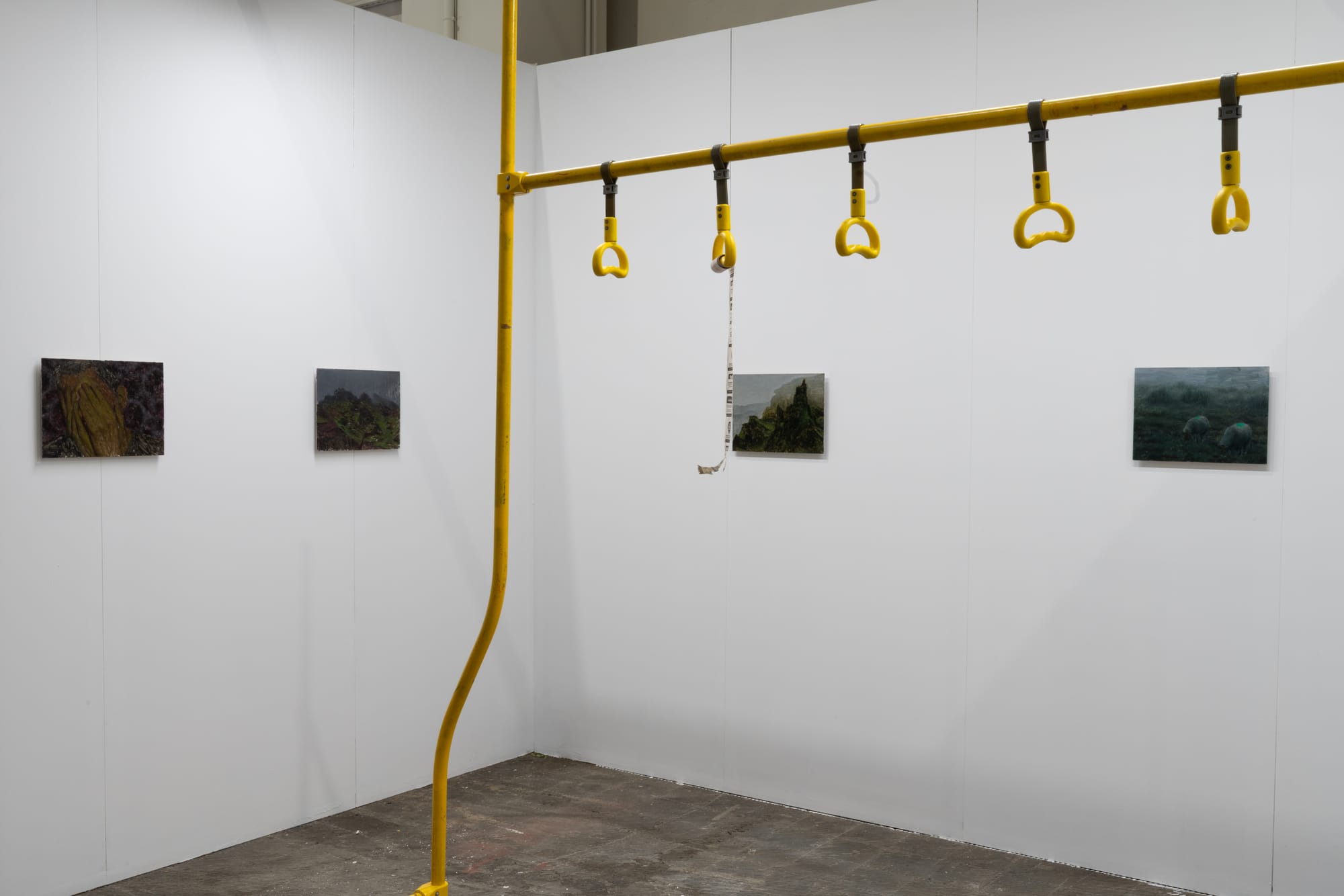
At the MYFAF (My First Art Fair) booths, a non-profit program, the SWAB Barcelona Foundation offers three free stands to beginner galleries that have never taken part in an international fair, allowing them to enter the professional circuit without its usual economic pressures. Among them was London’s Twilight Contemporary, founded in late 2024 to rethink what a contemporary gallery can be, pairing its exhibitions with evening events, workshops, and screenings through its “Twilight Lates”. Its presentation of Kitty McKay and William Reinsch approached world-building as an act of resistance. McKay’s manipulated urban reconstructions point to the exclusionary structures embedded in public space; a maze of yellow pipelines and handles filled the booth, while Reinsch’s imagined rural landscapes help him communicate experiences not easily put into words. Side by side, they stage a deliberate cognitive dissonance and ask viewers to re-evaluate normative perspectives on disability and mental health.
Habitability is also a question of accessibility here: of whose body and mind a space is built for, and who has to imagine another world because the existing one systematically does not make room for them.
Eating together, cleaning together
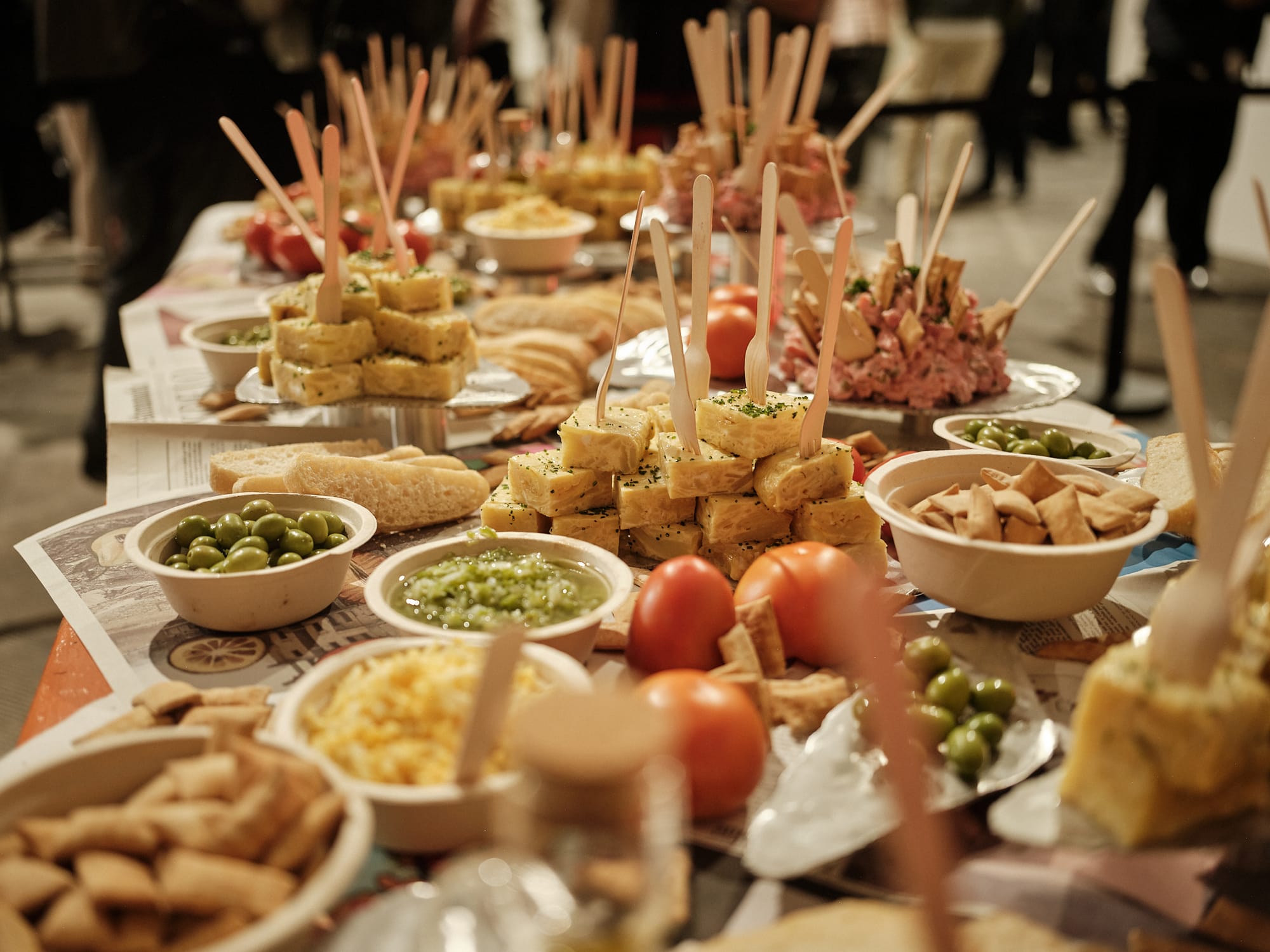
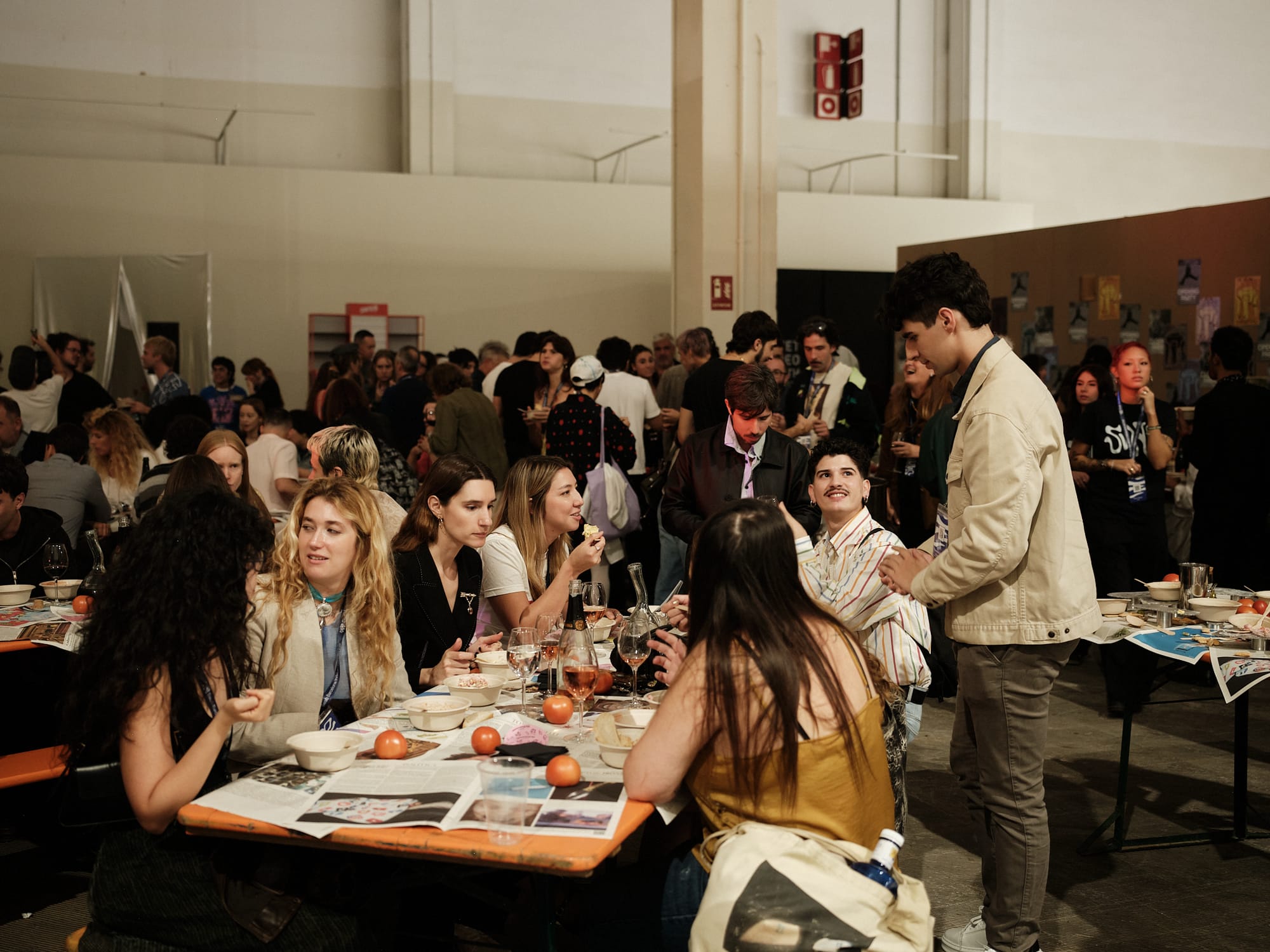
To intensify the homely feeling, SWAB offered collective meals, curated by GOR (Bandung, Indonesia). The night of the opening, in the Mediterranean tradition of gathering around a table, GOR invited the 200CENT collective to present “Collective Soup”, developed with its neighbourhood and inspired by Rirkrit Tiravanija’s Untitled (1992) and the practices of Relational Aesthetics. The soup is made from ingredients brought by the participants, so each contribution becomes part of the work. A shared pot is the most elementary form of shared resource, and an unusual gesture for an art fair, where those who show, those who purchase, and those who visit seldom break bread together, and even more rarely have the chance to digest the experience in common.
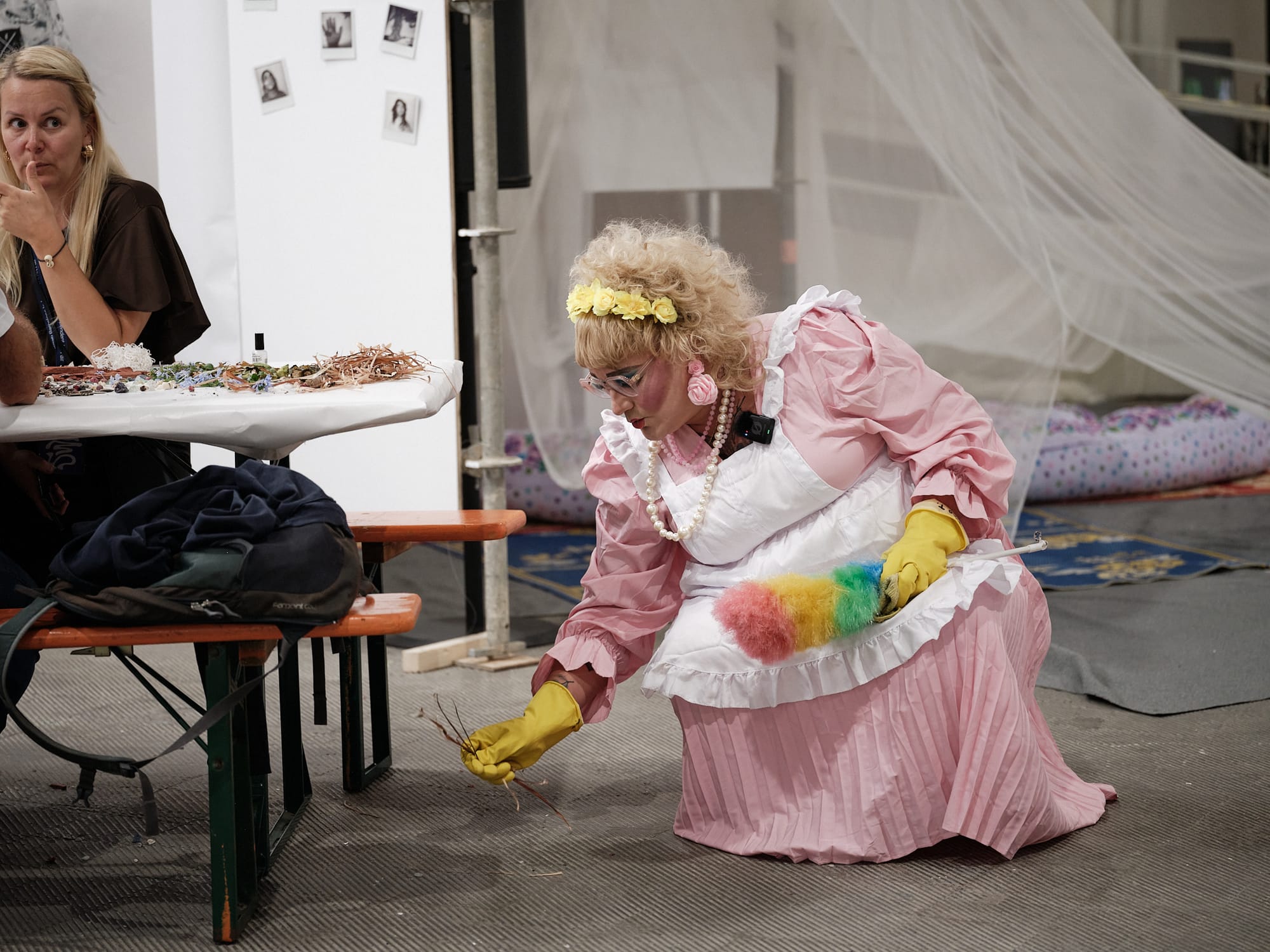
Care labor was also made visible. In Cleaning for You, Timo Tähkänen’s drag alter ego, Maimu Brushwood, cleaned the fair space while singing traditional Finnish lullabies, as part of Galleria Huuto’s TALKOOT theme. Talkoot is the Finnish tradition of gathering voluntarily, without pay, around a big task such as harvesting or building a barn, with the host offering food and drink as thanks. Maimu was an odd presence among the booths, familiar and uncomfortable at once, the way invisibilized gendered labor often is. Someone has to clean the house. The question is whether that person is seen, and whether the work is shared.
Frequencies and folded paper: other logistics of solidarity
Two of the fair’s most precious presences worked by bringing the voices of the city in, and the experiences happening in the fair, out. Stations of the Commons’ radio program ran through the fair like a second, invisible architecture. In a space where conversations about money are usually whispered in corners, the audio works suggested that art is a public matter, a political and social force, not just a luxury commodity. The same stubbornness belongs to Posttraumatic, the independent, irreverent Barcelona-based newspaper that left its natural habitat in the most underground spaces of the city to bring bold political ideas to the fair’s audience. Its tagline works as a manifesto: “Your newspaper of distrust. A biannual newspaper for people who hate the press and hate PDFs”. Posttraumatic circulated hand to hand alongside Arts of the Working Class.
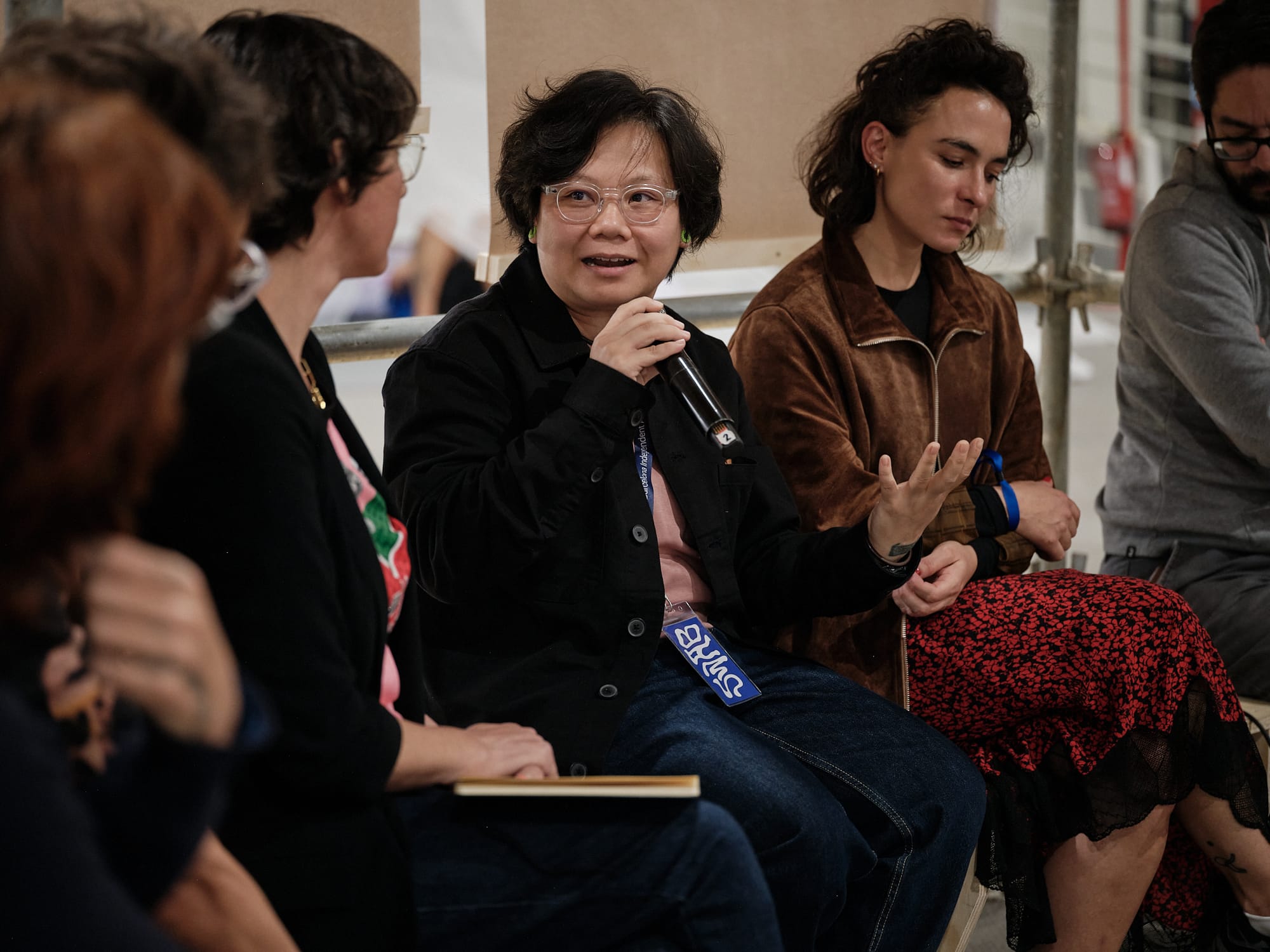
In a country, and in Europe at large, where the right to a roof over one’s head is being fought for in the streets, these media suggest that the housing struggle is also about having somewhere to speak from, and someone to be heard by.
The encampada
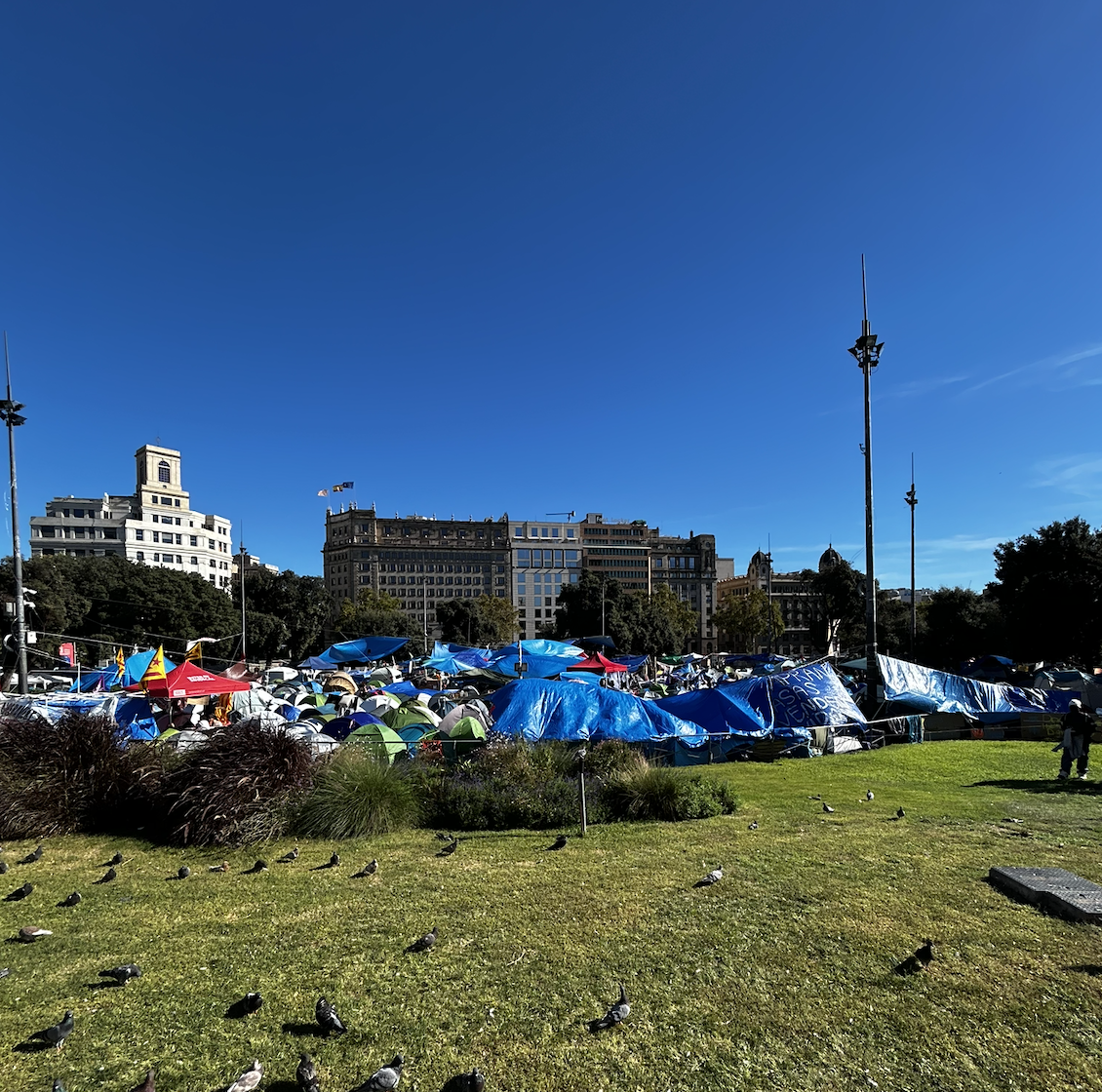
After the fair, the students’ encampada (protest camp) for housing rights in Plaça Catalunya offered a revealing counterpoint. The ephemeral village of tents and precarious structures already contained, in self-organized and DIY form, many features of the fair: a space for making and showing art, a canteen where people cook for each other, an info point for news of the city and of allied spaces, a circulation of voices. The one thing missing was capital, which lends a filter of luxury and exclusivity to everything it touches, and, in the fair, to the design of its shared spaces.
Most significant is that someone at SWAB would meet no obstacle in joining the encampada, and, more extraordinarily, the reverse was also true. The two audiences could overlap, with students, activist artists, journalists, and workers all together, sustaining each other. This is a strong sign of a fair’s genuine engagement with the urban, political, and economic environment it stands on, and it reflects the foresight of Carolina Díez-Cascón. In a moment of polycrisis, to be relevant, a fair cannot alienate or cherry-pick its audiences, nor unrealistically detach itself from the urgent political crises within which it is enmeshed. It has to understand shifting needs and the shifting roles of art and locate its natural spaces, which are often not galleries or museums but hybrid venues where thoughts, aesthetics, and sociality are forged through urgencies.
This is where SWAB’s role now lies: placing the fair at the service of an ecosystem, creating the conditions, connections, and structures that help it grow and sustain itself over time. María del Carmen could not cross her threshold again. The least a fair can do, in a city that is losing its doors, is leave its own open as often as possible.
//